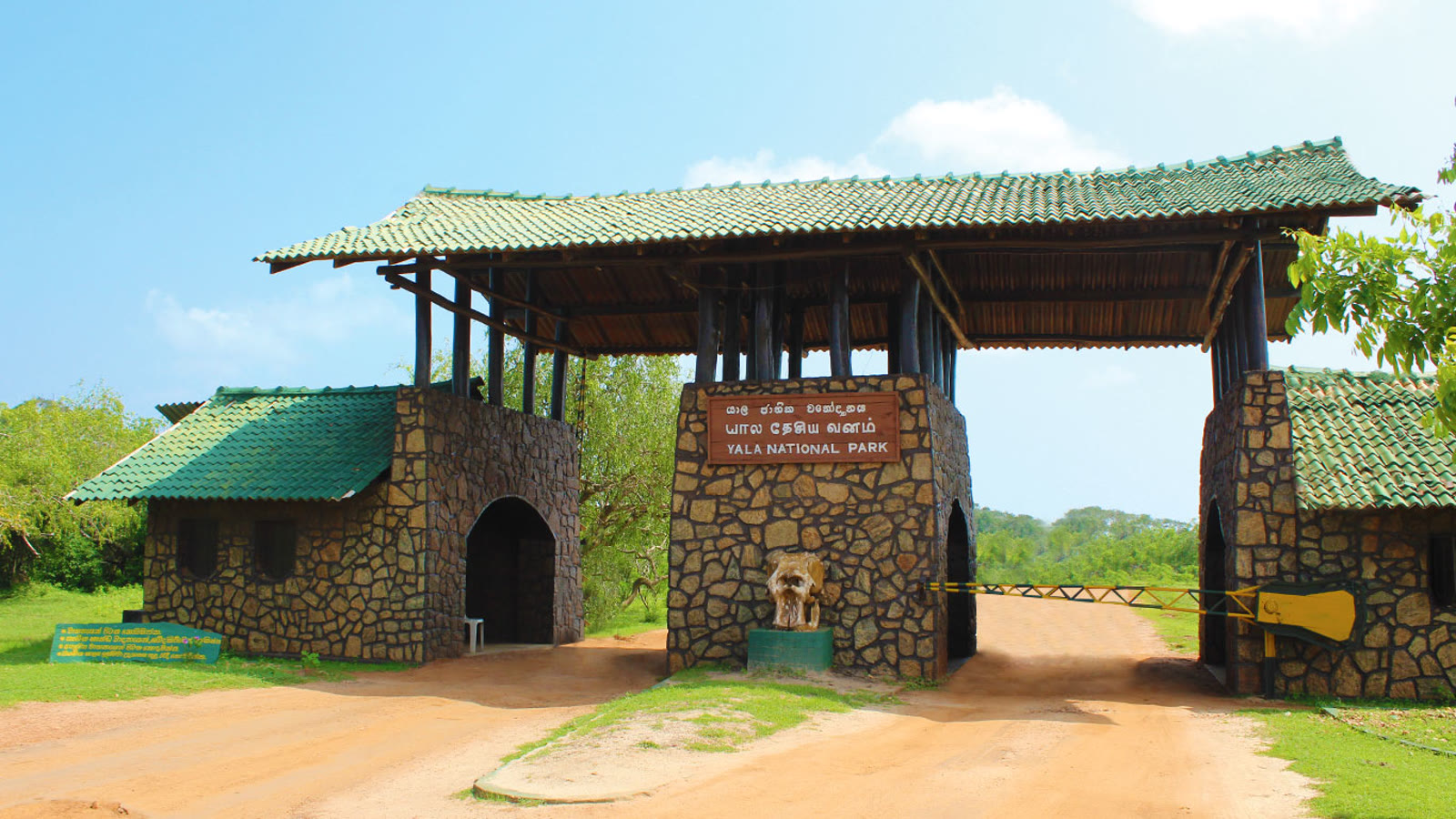
 YALA
How Much to Tip Your Yala Safari Tracker and Driver
You've probably heard that tipping in Sri Lanka is "not expected." We checked, in the sense that anyone who has actually sat in a Yala jeep for six hours checks: it's expected. Quietly, informally, and without a printed scale, but expected.
There is no DWC-mandated tipping rate, no laminated card in the jeep telling you what to hand over. That absence of a rulebook is exactly why so many visitors leave the park unsure whether they were generous, stingy, or completely out of line.
Why there's no fixed number
Tipping in Yala sits outside the formal price structure entirely. When you book a safari, the price you're quoted covers the jeep hire, the driver's wage, the park entry fee, and the tracker's fee if one is included. None of that includes a tip. It's a separate, voluntary transaction between you and the two people who spent the morning finding you a leopard.
That informality isn't unique to Yala. It's how most of Sri Lanka's tourism economy works outside hotels, where service charges are itemised on a bill. In a jeep, there's no bill for "effort," even though effort is precisely what you're paying for when a tracker reads a fresh pug mark on the Yala road near Patanangala, or a driver reverses fifty metres in under a minute because he heard an alarm call the vehicle behind never registered.
Guidebooks that quote a specific tip percentage for Sri Lankan safaris are usually recycling a figure written for hotel restaurant service, not adapted to open-vehicle wildlife tracking, where the value delivered is far more variable. A driver-tracker pair who found you a resting leopard in dense scrub near Block I in under an hour has done meaningfully more skilled work than one who drove the main tracks for three hours and shrugged at an empty park.
What actually goes into the job
It helps to understand what you're tipping for, because it isn't just driving.
A good tracker is reading the landscape constantly: chital and sambar alarm calls, fresh scat, disturbed grass at a waterhole, the particular hush that falls over a bird flock when something is moving nearby. Recognising a warning call cluster from spotted deer is a skill in itself, and it's the single most reliable early signal that a leopard is close, long before anyone sees fur.
Drivers, meanwhile, are managing something visitors rarely think about: jeep positioning etiquette in a park that can get crowded at a good sighting, particularly in the peak dry months. A driver who angles the vehicle for your photos without blocking someone else's, who doesn't rush a mugger crocodile basking at a tank edge, who keeps the jeep steady on a badly rutted track without a fuss, is doing a genuinely skilled job that has nothing to do with luck.
None of this is metered. A tip is effectively the only feedback mechanism that exists for quality of guiding in Yala, since there's no formal rating system attached to individual trackers the way there might be for a licensed dive instructor elsewhere.
A workable range, not a rule
With that context, here's a reasonable, non-official way to think about the amount, treated as a guide rather than a fixed tariff.
For a half-day safari with a driver and a separate park tracker, many visitors tip each of them individually rather than pooling it into one amount, since they're doing different jobs. For a full-day safari, especially one that runs through the heat of midday when both driver and tracker are working longer for the same fixed fee, a somewhat higher amount for that extended effort is reasonable.
Group size matters too. If you're one of six people split across a single vehicle, the tip per person can be modest and still add up to something worthwhile for the crew. If you've hired a jeep privately for two people, the per-person contribution naturally needs to be higher to reach the same total.
Cash is the only practical method. Card payments don't exist at this level of the safari economy, and asking a driver to split a tip via a payment app is not something the system supports. Sri Lankan rupees are preferable to foreign currency, since a driver or tracker who receives dollars or euros still has to exchange them, often at a worse rate than the traveller assumes.
Timing matters as well. Tip at the end of the safari, directly to the driver and separately to the tracker if there are two people to thank, not through a tour agency days later where it may not reach the right hands at all.
Seasonal and structural things worth knowing
Tipping generosity, fairly or not, tends to track sighting quality, and sighting quality tracks season. During the dry months from roughly May through September, when water sources shrink and animals concentrate around the remaining tanks and waterholes, sightings are generally more frequent and more dramatic, which naturally inflates what visitors feel moved to tip. During the wetter months, when the bush is dense and green and animals are dispersed, a tracker's skill matters more, not less, even if the sighting count is lower. It's worth tipping on effort and knowledge, not purely on whether a leopard appeared on cue.
It's also worth remembering that trackers and drivers earn a living from a park that closes for a stretch each year, typically over a period in the dry season for habitat recovery, and that some blocks face periodic closures during droughts as water resources are prioritised. That seasonality makes the income from each safari matter more, not less, during the months the park is open.
Exact figures for driver and tracker incomes aren't publicly tracked in any official DWC dataset, and this article won't invent numbers to fill that gap. But it's well understood within the industry that jeep crews are freelance or small-operator employed, meaning tips form a genuine part of household income rather than a symbolic extra.
If you want to do more than tip
A cash tip is fine and sufficient. But if a tracker or driver has clearly gone beyond the ordinary (waiting patiently through a long, quiet stretch without complaint, explaining behaviour rather than just pointing at animals, handling a crowded sighting with visible restraint) some visitors choose to also mention the crew by name to their tour operator, or leave a specific written review naming them. Unlike a cash tip, that kind of feedback follows a driver's reputation into future bookings, which can matter more over a season than any single day's payment.
Sources
- Department of Wildlife Conservation Sri Lanka
- General knowledge of Sri Lankan safari industry structure and seasonal park operations
Ready to see it for yourself?
Book a safari