 YALA
What to Do If You See Wildlife Outside the Jeep: Yala Safety Protocol
You've probably heard that wildlife in Yala stays neatly inside the park boundary and behaves accordingly. It doesn't. Animals cross fences, wander near entrance queues, wade into tank shallows beside parking areas, and occasionally turn up on the access road before you've even shown your ticket. The jeep is not a magic containment field. It's a vehicle, and the safety it provides depends on how you use it, not on some invisible rule that wildlife respects.
This matters because Yala sits against a working landscape, not a sealed reserve. Villages, paddy fields, the Palatupana salt pans and the road corridors leading to the Palatupana and Katagamuwa entrances all border areas where elephants, leopards and sloth bears routinely pass through. So the real question isn't "what if I see wildlife outside the park" as some rare fluke. It's "what do I do when it happens", because sooner or later, for a lot of visitors, it does.
Why Animals Turn Up Where Jeeps Aren't
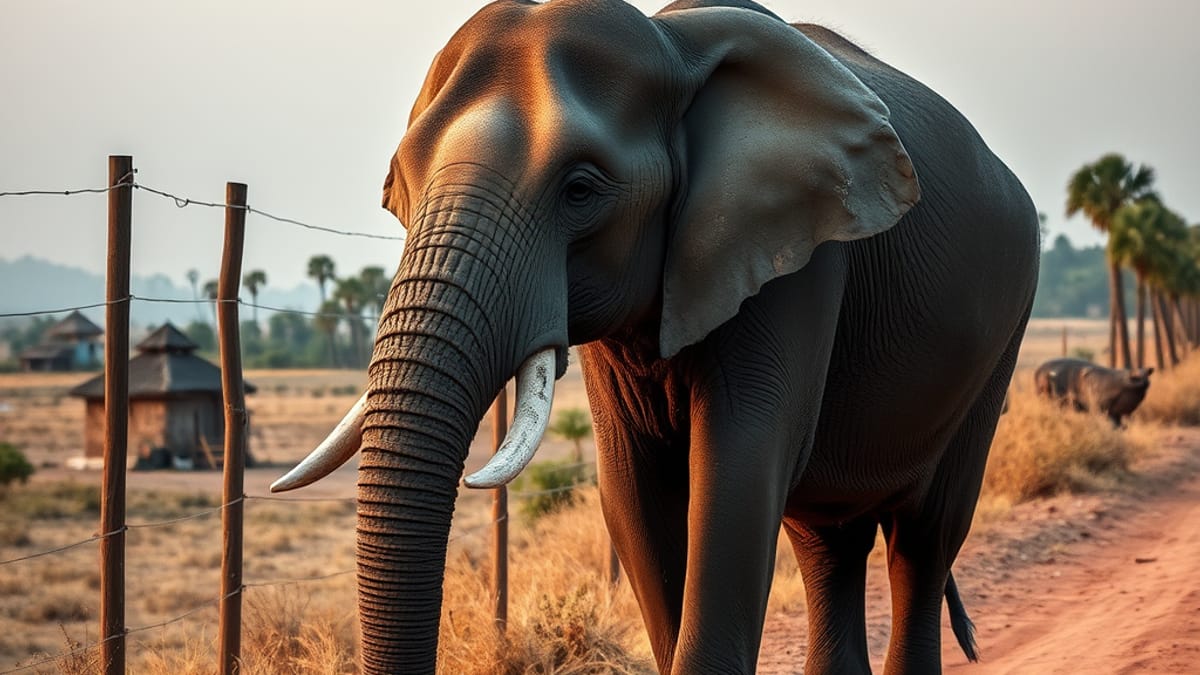
Elephants are the main reason this topic exists at all. Yala's elephant population isn't confined by the park boundary in any strict sense; elephants move along traditional corridors that predate the park itself, and those corridors cross roads, cultivated land and sometimes the edges of tourist infrastructure. An elephant standing near a car park or a lodge access track isn't unusual behaviour. It's just an animal doing what it has always done, in a landscape that has been built up around it.
Leopards are different. They're far more likely to be seen from inside a jeep on a park track than anywhere near people on foot, because leopards are ambush predators that avoid open confrontation and generally treat humans as something to move away from, not toward. A leopard sighting outside a vehicle, at close range, in Yala is rare. But not impossible, especially around the buffer zones and at dawn or dusk when leopards are most active and visibility is low.
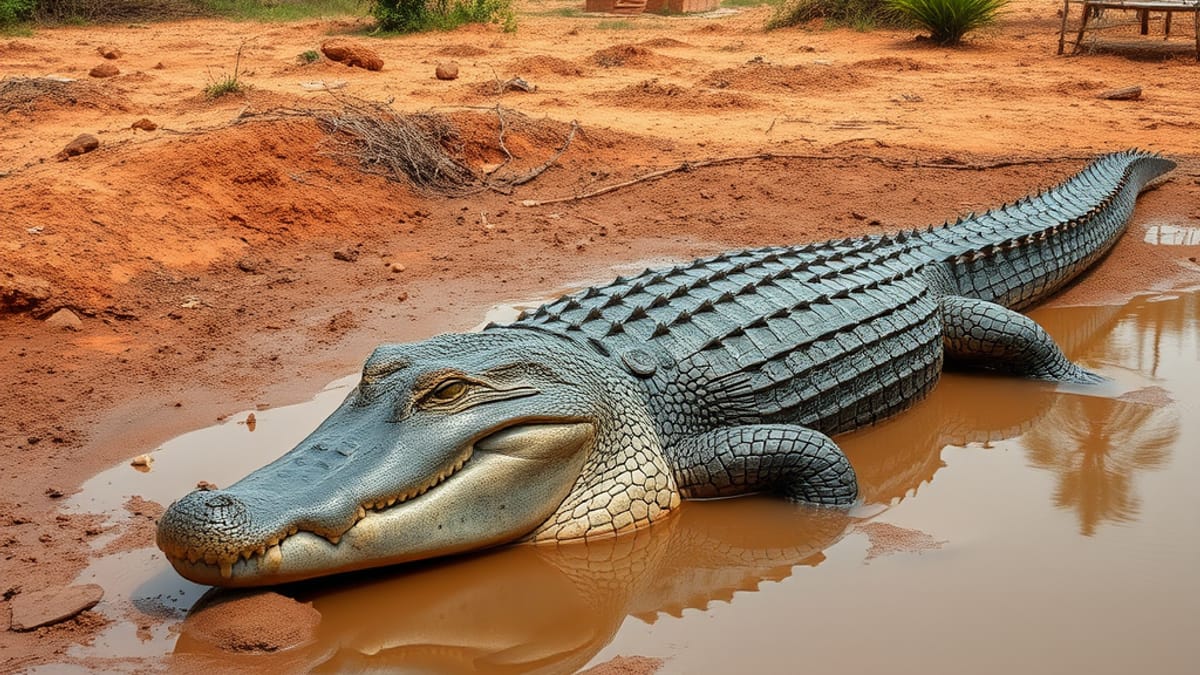
Sloth bears are the wildcard. They have poor eyesight, they're often absorbed in digging for termites, and they can react explosively at close range if startled, more so than leopards in most documented cases. Crocodiles, particularly mugger crocodiles, bask near tank edges and causeways, including spots close to camping areas and rest stops, and they're easy to overlook because they don't move until they do.
None of this means Yala is dangerous in the way brochures sometimes imply when they warn about "wild animals everywhere." It means the risk is specific, situational, and manageable if you know what you're actually dealing with.
The Core Protocol: Stay In, Stay Still, Stay Quiet
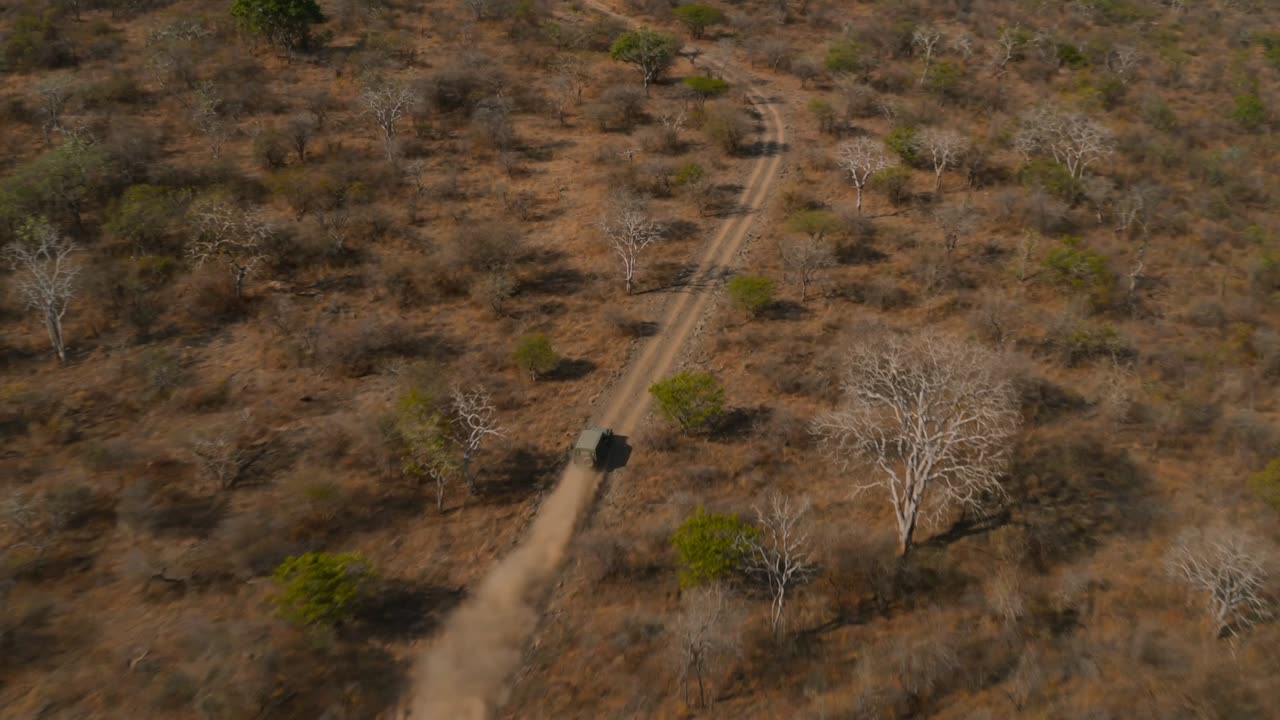
If wildlife appears while you are inside the jeep on a track, the rule is simple and almost never needs restating: stay in the vehicle. Don't stand up through the roof hatch for a better photo, don't lean out, don't ask the driver to get closer than they're comfortable with. Guides and trackers working in Yala do this daily and have a much better sense of an animal's mood and distance than a visitor glancing through a zoom lens.
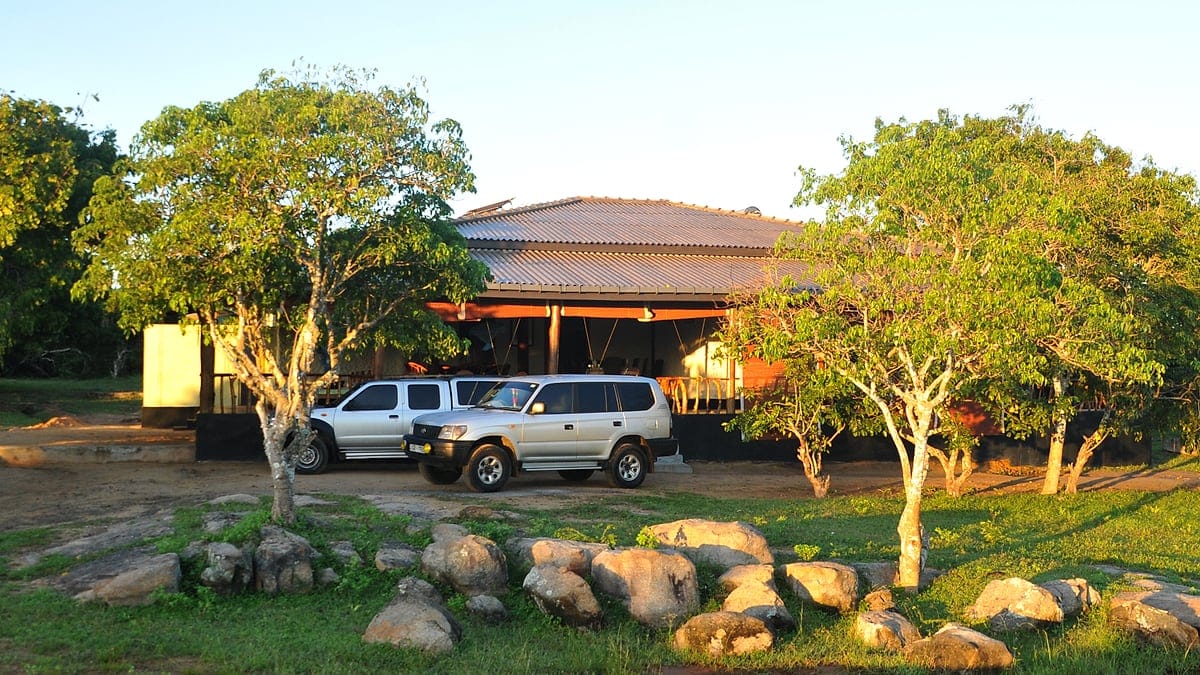
The harder scenario is when you encounter wildlife somewhere the jeep isn't, at an entrance gate, a car park, a campsite, or a stretch of access road outside the formal safari track. Here the protocol shifts:
- Do not approach on foot, ever, regardless of how habituated the animal looks. Animals that appear calm around vehicles often are not calm around a human silhouette at ground level, because that's a completely different visual signal to them.
- Retreat slowly toward a vehicle or solid structure. Don't run. Running can trigger a chase response in several species, including leopards and sloth bears.
- If an elephant is involved, give it as much space as the terrain allows and let it choose its own path. Elephants near roads are usually transiting somewhere, not settling in, and most encounters resolve themselves within minutes if people don't crowd or startle them.
- Keep noise down. Shouting, horn-blowing and sudden movement are far more likely to provoke a bad outcome than quiet stillness.
- Report it. DWC staff and park trackers rely on visitor reports of wildlife near entrances or campsites to adjust patrols and warn subsequent visitors, particularly during dry months when animals range closer to water sources and human areas out of necessity rather than curiosity.
Seasonal Risk: Why the Dry Months Change the Picture
The period roughly from May through September, when Yala's internal water sources shrink and Block I sometimes faces partial closures over drought conditions, is also when animals are most likely to be found near tanks, bunds and human infrastructure that still holds water. This is well documented behaviourally: wildlife concentrates around remaining water, and that includes areas closer to park gates, staff quarters and camping grounds than would be typical in the wetter months. If you're visiting in this window, treat any water source, however unremarkable it looks, as a possible animal hotspot, not just a scenic stop.
By contrast, during the wetter months from around October to January, water is more dispersed across the park, and animals have less reason to cluster near park edges. Encounters outside the jeep are not eliminated, but the pattern of them shifts. This seasonal logic is worth knowing before you assume a fixed rule applies year-round; it doesn't. For more on how the calendar shapes what you'll actually see and where, it's worth reading When to Visit Yala.
What Park Staff and Guides Actually Do
DWC trackers and experienced guides are trained to read animal behaviour rather than react to the mere fact of a sighting. A leopard glancing toward a jeep and continuing to walk is treated very differently to a leopard that stops, stares, and flattens its ears. The same logic applies outside the vehicle. If you're with a guide when an out-of-jeep sighting happens, and most tourists will be, follow their instructions immediately rather than your own instinct, because they are reading signals you likely aren't trained to notice.
At entrances and campsites, DWC does not rely purely on visitor common sense. Camping areas inside the park, covered in more detail in Camping in Yala National Park: Rules, Permits and How to Book, have their own protocols around food storage, torchlight use and movement after dark, precisely because animals do wander through overnight. These rules exist because incidents have happened before, not as generic caution.
The Honest Bottom Line
Most visitors to Yala will never face a genuine close encounter outside a jeep. The overwhelming majority of sightings happen exactly where they're supposed to, from a vehicle, on a track, at a respectful distance. But "outside the jeep" scenarios aren't science fiction. They happen at gates, at camps, on access roads, and near tanks, especially in the dry months. The protocol isn't complicated: don't approach, don't run, retreat calmly, and let people trained for this handle the rest. Exact incident numbers for out-of-vehicle wildlife encounters aren't publicly tracked in a way that supports a precise statistic here, so treat any specific figure you see elsewhere with scepticism. What is well established is the behavioural pattern, and that pattern rewards calm, distance and quiet every time.
Sources
- Department of Wildlife Conservation Sri Lanka
Ready to see it for yourself?
Book a safari