 YALA
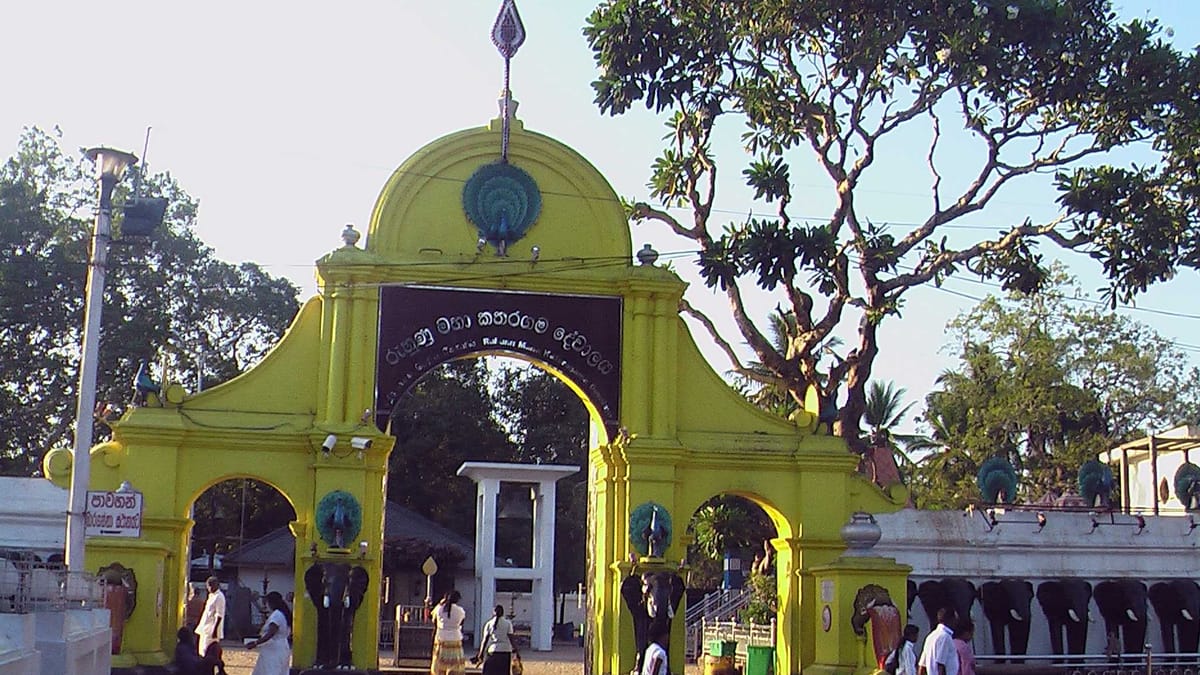
Image: me · Wikimedia Commons (CC BY-SA 4.0)
Kataragama Temple Day Trip from Yala
Most people who stay near Yala never leave the safari bubble. Morning drive, breakfast, pool, afternoon drive, dinner, repeat. Which is fine, but it means skipping one of the more interesting half-days in southern Sri Lanka: a trip to Kataragama, a temple town that has spent well over a thousand years being sacred to more than one religion at once.
You've probably heard it described as "the place where Buddhists and Hindus worship side by side." We won't dispute that, it's broadly true, but it undersells the town. Kataragama is also significant to local Muslim communities through the Al-Khizr shrine, and Vedda communities have historical links to the site that predate most of the written record. Calling it a two-faith town is the tourism-brochure version. The real picture is messier and more interesting.
Why Kataragama Sits So Close to Yala
Geographically this isn't a coincidence. Kataragama sits inland from Tissamaharama, roughly on the route between the Yala area and the interior towns of Buttala and Wellawaya. Historically, this stretch of the dry zone was pilgrim country long before it was safari country: the old foot pilgrimage from up-country Sri Lanka to Kataragama, known as the Pada Yatra, still runs each year, with walkers covering enormous distances through forest and scrub to arrive in time for the annual festival season.
That festival, the Kataragama Esala perahera, usually falls around July or August, timed to the Esala full moon like Kandy's better-known perahera. If your Yala trip happens to land in that window, the town transforms: fire-walking, kavadi dancers carrying pierced skewers as acts of devotion, and crowds that dwarf anything you'll see on an ordinary visit. Outside festival season, Kataragama is calm, almost sleepy, and arguably easier to actually look at.
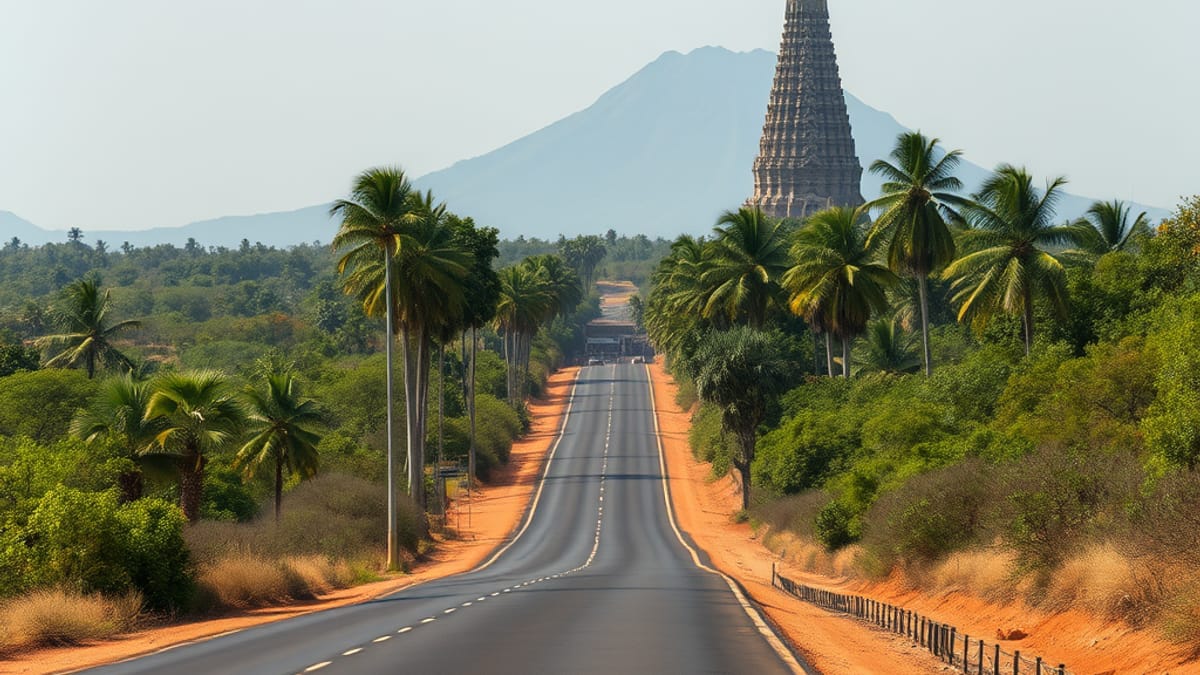
The drive from most Yala-area hotels, whether you're based near the Palatupana entrance or further out toward Tissamaharama, is generally under an hour. That's short enough to fit into a single day alongside a morning game drive, which is the whole appeal of doing this as a day trip rather than a separate overnight stop.
What You're Actually Looking At
The core of Kataragama is the Ruhunu Maha Kataragama Devalaya, the shrine dedicated to the deity Kataragama, who is closely identified with the Hindu god Murugan/Skanda. Around it sits a cluster of related structures: a Buddhist stupa, the Kiri Vehera, said to be very old, and Hindu shrine buildings including one dedicated to the goddess Teyvani. Walking between them in a single afternoon, moving from Buddhist chanting to Hindu drumming to the quieter Islamic shrine, is a genuinely unusual experience by Sri Lankan standards. Most sacred sites in the country belong clearly to one tradition. Kataragama refuses to.
There's also a river, the Menik Ganga, running along the edge of the temple complex, and ritual bathing in it before entering the shrine area is a normal part of the pilgrimage for many visitors. You don't need to bathe to visit respectfully, but expect to see people doing so, particularly in the early morning and around festival dates.
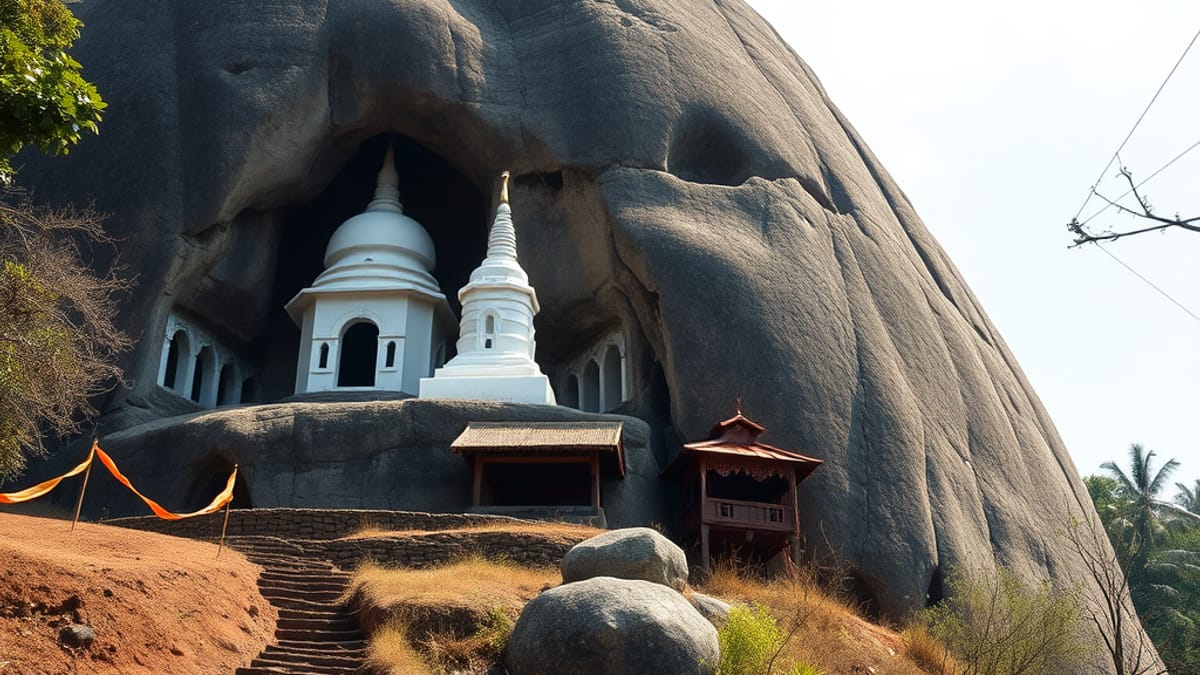
If you've already read Sithulpawwa Rock Temple, you'll notice a pattern here. This part of Sri Lanka's deep south has always had two economies layered on top of each other: pilgrimage and, more recently, wildlife tourism. Kataragama and Sithulpawwa were both drawing travelers across this landscape long before Yala had gates or jeeps.
Practical Timing: Making It Work Around a Safari
The honest logistical problem with a Kataragama day trip is that Yala's best game viewing happens at the same time of day the temple is at its calmest, which is early morning. Most visitors solve this by taking the morning safari drive, returning to the hotel by mid-morning, and using the early afternoon to drive to Kataragama, arriving in time for the evening rituals, which tend to be more animated than the daytime lull.
Evening puja at the main devalaya is generally the liveliest time to be there, with drumming and offerings drawing a proper crowd even outside festival season. If you'd rather see the town at its quietest and coolest, an early morning visit before a Yala afternoon drive also works, though you'll trade atmosphere for peace.
Dress matters more here than at most Sri Lankan sites that see a lot of tourists. Shoulders and knees covered, shoes off before entering shrine areas, and a general expectation of quiet, unhurried behaviour. This isn't a photo-stop temple in the way some heritage sites have become. It's an active place of worship for people who have often traveled a long way to be there, and it's worth treating it that way.
Exact visitor numbers for Kataragama aren't publicly tracked in the way park entries are, so it's not possible to say precisely how busy any given day will be. As a general rule, weekends, full moon poya days, and obviously the Esala festival period draw far bigger crowds than an ordinary weekday afternoon.
Getting There and Back
Most Yala-based drivers and safari operators can arrange the Kataragama leg as an add-on to a standard stay, either as a private car transfer or, if you're touring independently, a short tuk-tuk or taxi ride from Tissamaharama. If you're planning your Yala route from further afield, it's worth reading How to Get to Yala National Park first, since several of the main road routes into the park pass close enough to Kataragama that a stop can be folded in without a major detour.
For travelers weighing up whether Yala deserves more than a single overnight stay, Kataragama is one of the stronger arguments for staying longer. A rushed one-night Yala visit rarely leaves room for it. Three nights does, comfortably, with space left over for Sithulpawwa or the coast as well. That case is made in more detail in Is Yala Just a One-Night Stop?
Bring water, modest clothing, and small notes if you plan to make an offering, since change is not always readily available at the shrine. Beyond that, there's little to prepare for. Kataragama doesn't require planning so much as time, which is the one thing a rushed Yala itinerary tends to leave out.
Sources
- Department of Wildlife Conservation Sri Lanka
- General well-established knowledge of Sri Lankan pilgrimage sites, the Kataragama Esala festival, and Sri Lanka's dry-zone geography
Ready to see it for yourself?
Book a safari