 YALA
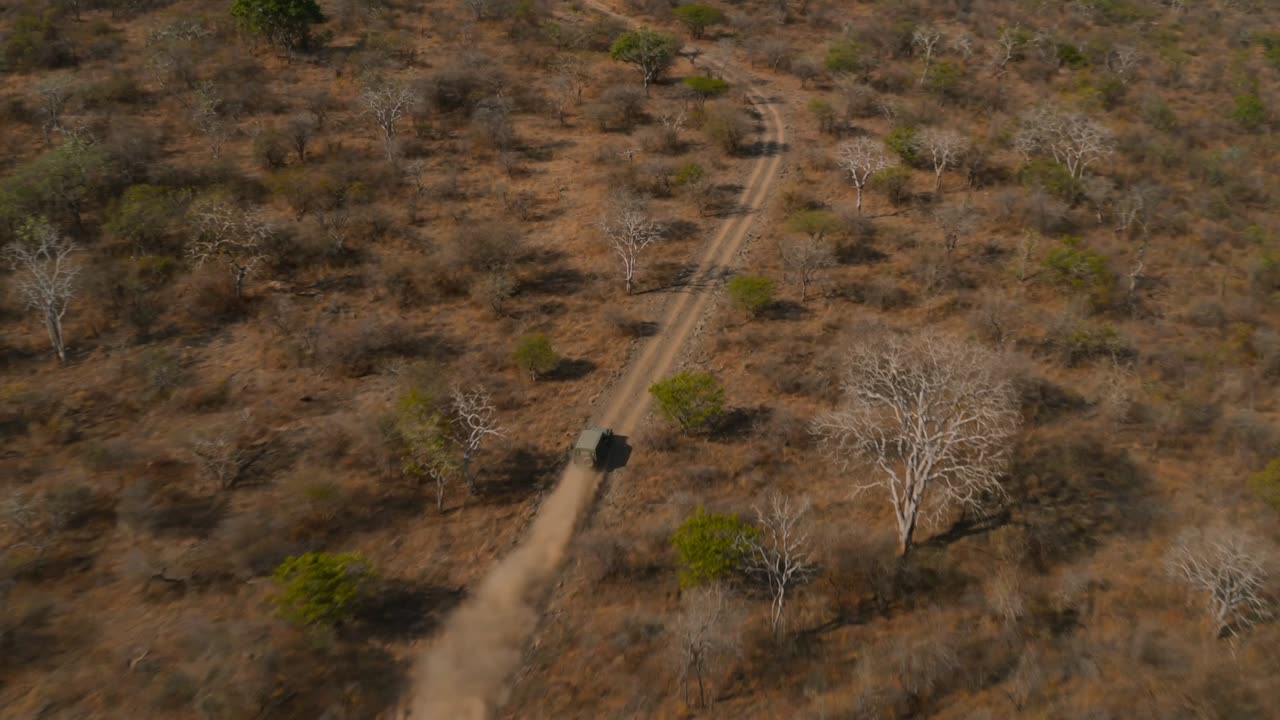
Is Yala Just a One-Night Stop? Why the Deep South Deserves Three
Ask most visitors how long they spent at Yala and the answer is the same: one night. Arrive in the afternoon, a 5 a.m. alarm, one dawn drive, then straight back to Mirissa or up to Ella by lunch.
That's a perfectly good way to see a leopard, if one cooperates. It's a poor way to see the south-east of Sri Lanka, because the park is only the middle of the story. Within about an hour's drive of the gates sits the region that was once the ancient kingdom of Ruhuna: a sea-cliff temple tied to one of the island's founding legends, a dagoba built by the king who started it all, a shrine that four faiths share, and back roads where elephants still set the pace.
Here's what you miss on a one-night visit, and how to fit it in without wasting a day.
Why the one-night habit exists
It isn't laziness. Most itineraries are built backwards from the beaches and the hill country, and Yala gets slotted in as a transit stop between them. Hotels near the park often sell a single-night "safari package," and the drive from the south coast makes a same-day round trip look tempting.
The catch is that a single safari is a gamble. Leopards, sloth bears and elephants don't keep schedules, and a quiet morning in the park is common. A second drive, ideally in a different block or at a different time of day, roughly doubles your odds. And the afternoons you'd otherwise spend in a car are exactly when the places below are at their best.
Tissamaharama: the capital most people only sleep in
Almost everyone who visits Yala stays in or near Tissamaharama, and almost nobody looks at it. That's a shame, because "Tissa" was the heart of Ruhuna, the southern kingdom that ran parallel to Anuradhapura more than two thousand years ago.
Tissa Wewa is the place to start. It's an ancient reservoir, not a natural lake, and it still irrigates the paddy fields around town. Walk or cycle the bund road in the late afternoon and you'll see herons, cormorants, painted storks and, if you're lucky, a water monitor hauling out on the bank. At sunset it's one of the calmest places in the south.
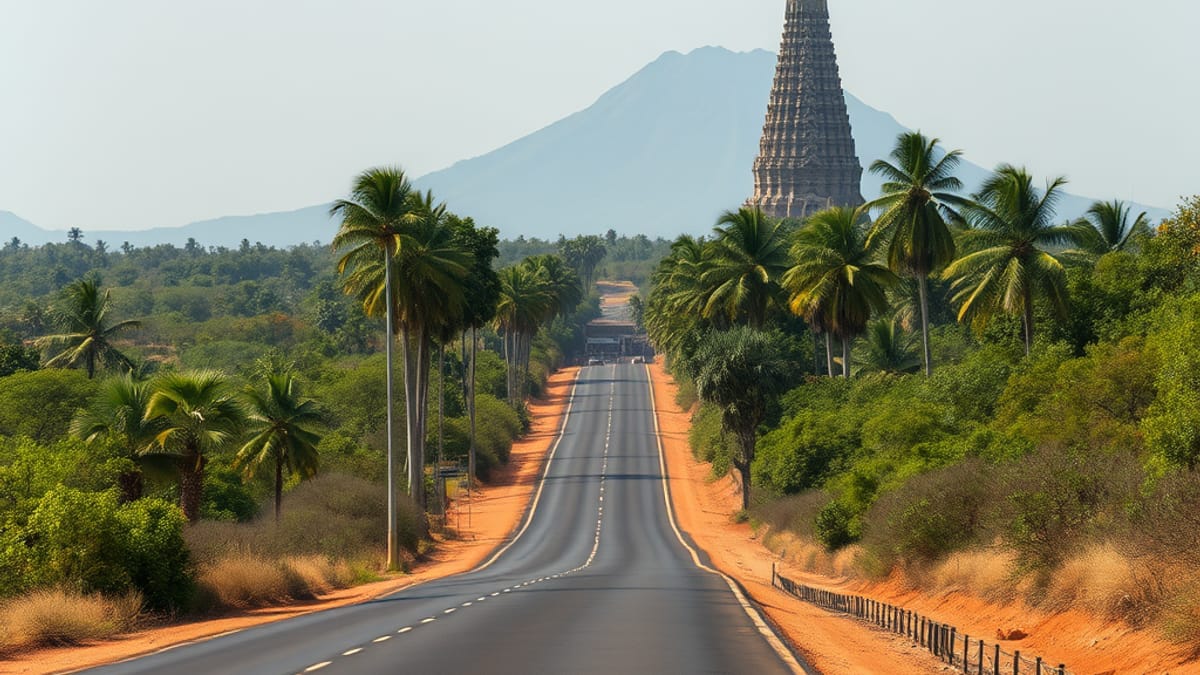
A short walk from the water, the Tissamaharama Raja Maha Viharaya stupa rises out of the palms. Tradition credits it to King Kavantissa, and it's among the largest in the south. Come around dusk, when families bring flowers and oil lamps, and the white dome turns pink.
Worth knowing: Tissa is flat, compact and easy to explore by tuk-tuk. You don't need a tour for any of this, just a free afternoon.
Kirinda: where a princess came ashore
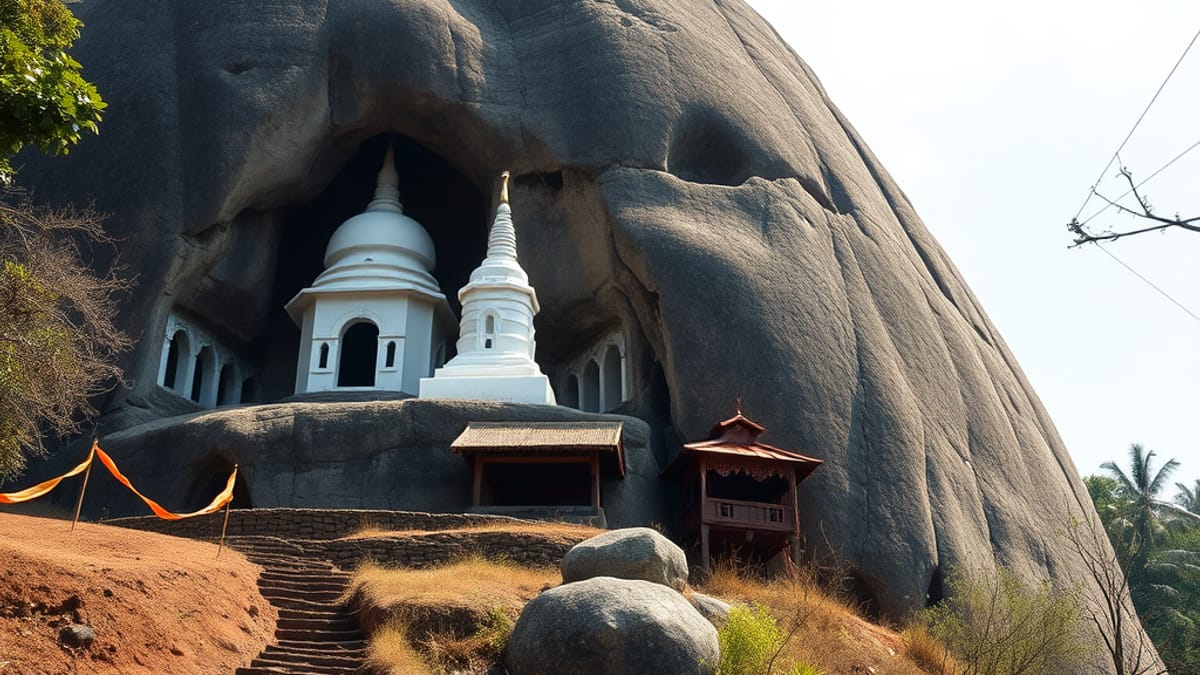
Ten minutes south of Tissa, the road ends at the sea. Kirinda is a working fishing village, and on a granite outcrop above the beach sits the Kirinda Raja Maha Viharaya, a small white stupa with the Indian Ocean on three sides.
The site matters because of a legend every Sri Lankan child knows. A princess named Viharamahadevi was set adrift in a boat by her father, King Kelanitissa, to calm the sea after a catastrophe on the west coast. The boat washed up here. She married King Kavantissa of Ruhuna, and their son Dutugemunu went on to unify the island. Whether you read it as history or as story, standing on the rock with the surf below, it's easy to see why this was the spot chosen for it.
Climb the rock for the view, walk the beach below, and look out for the offshore lighthouse on the Great Basses reef on a clear day.
Be careful: the beach is beautiful but the currents here are strong and unpredictable. Treat it as a place to walk, not to swim.
Kataragama: one shrine, four faiths
About half an hour north-east of Tissa, Kataragama is one of the most important pilgrimage towns in Sri Lanka, and one of the very few places anywhere where Buddhists, Hindus, Muslims and the indigenous Vedda community all come to worship at the same sacred complex.
The walk into the complex is part of the experience. You cross the Menik Ganga, where many pilgrims bathe before entering, then follow a long avenue to the Maha Devale, the main shrine to the god Kataragama (known to Hindus as Murugan or Skanda). Nearby is a mosque and a Muslim shrine, and at the far end of the avenue stands Kiri Vehera, a gleaming white stupa.
The best time to go is for the evening puja. Drums, conch shells, pilgrims carrying baskets of fruit on their heads, and a crowd that is genuinely there to pray rather than to watch. It's loud, moving and unlike anything else on a south-coast itinerary.
If you're visiting in July or August, check the dates of the Esala festival, when Kataragama holds its nightly perahera processions with decorated elephants, dancers and, on the final days, fire-walking. The town gets extremely busy, so book accommodation early.
Etiquette: cover shoulders and knees, remove your shoes, and leave the camera down during the puja itself unless it's clearly welcome.
Buttala and the road to Block V
Head north from Kataragama and the scrub gives way to paddy fields and low hills around Buttala, the quietest corner of this circuit and the one that rewards travellers who want to avoid the crowds.
The big sight is Yudaganawa, a massive, partly restored stupa. Local tradition links it to the struggle between Dutugemunu and his brother Saddhatissa for the throne, which neatly closes the loop on the story that began on the rock at Kirinda. Farther out, the colossal standing Buddha at Maligawila, carved from a single block of stone, is well worth the detour if you have a spare half-day.
Buttala also matters for the park itself. It's the natural base for the Galge entrance and Yala's Blocks IV and V, wilder, forested sectors that see a fraction of the jeeps that crowd Block I. If you've already done a Block I drive, a morning out of Galge feels like a different park.
The road is part of the safari
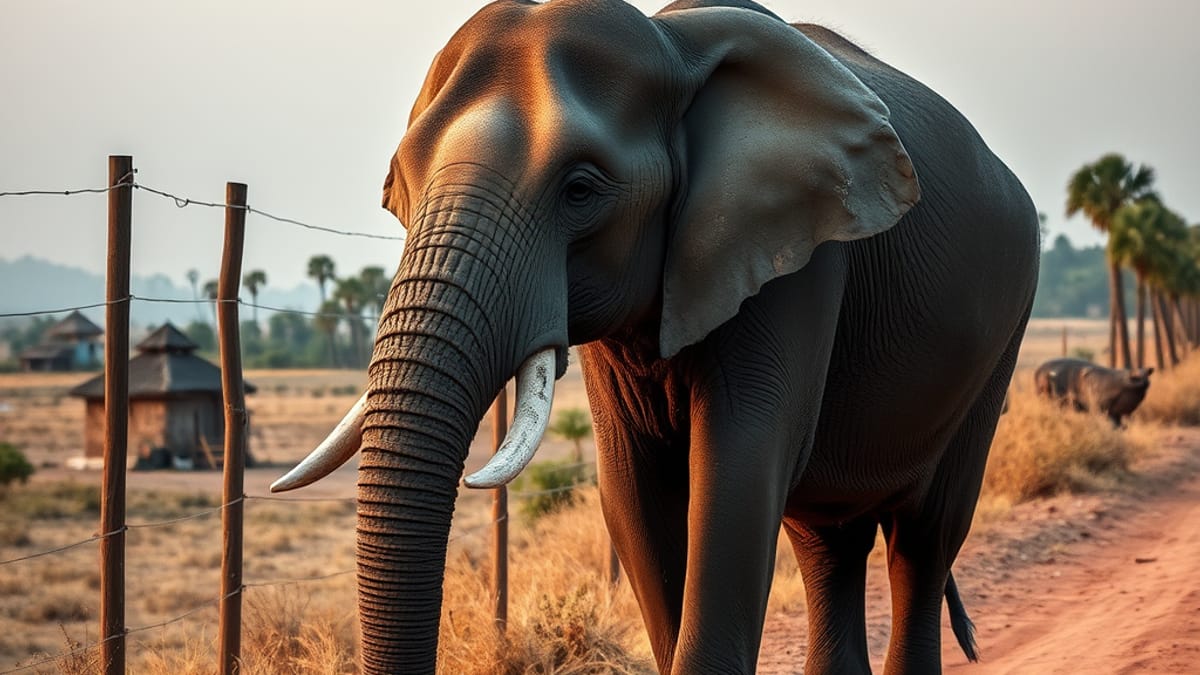
On the roads that link Tissa, Kataragama and Buttala, you'll regularly pass through elephant country outside the park fence. Seeing a herd cross the road in front of you, or a lone bull feeding at the verge, is one of the most memorable moments of the whole trip.
It also comes with rules. Stay in the vehicle, keep the engine running, give them room, and never, ever feed them. Elephants that learn to associate cars with food become dangerous, and the result is usually worse for the elephant than for anyone else. Our guide to what to do if you see wildlife outside the jeep covers exactly how to handle it, and the Yala elephant corridor explains why these encounters are becoming more common.
Two ways to plan it
Two nights: safari plus culture
- Day 1: Arrive by early afternoon. Tissa Wewa at sunset, dinner in Tissa.
- Day 2: Dawn safari from Palatupana. Rest through the midday heat. Late afternoon at Kirinda, then the evening puja at Kataragama.
- Day 3: Leave after breakfast, or add a second dawn drive before you go.
Three nights: the full south-east
- Day 1: Arrive, Tissa Wewa and the stupa at dusk.
- Day 2: Dawn safari in Block I. Kirinda in the late afternoon.
- Day 3: Morning drive out of Galge into Block V. Yudaganawa on the way back, then Kataragama for the evening puja.
- Day 4: A slow breakfast, then onward to Ella or the coast.
Three nights doesn't just add sights. It turns a single roll of the dice in the park into two different drives in two very different blocks, which is the single best way to improve your chances of a leopard or a sloth bear.
A note on timing this year
Blocks I and II close every year for the dry-season drought closure, from 14 September to 15 October. Blocks IV and V stay open throughout, and every place in this guide is outside the park. If you're travelling during the closure, a longer stay built around a Galge drive plus Kirinda, Tissa and Kataragama is a better trip than a single rushed night, not a compromise. See the 2026 closure details and when to visit Yala for the rest of the year.
So, is Yala a one-night wonder?
Only if you let it be. One night buys you one safari. Two or three buy you a region: the kingdom that shaped the island's history, a pilgrimage town with no equivalent anywhere else in the country, and roads where the wildlife doesn't stop at the park boundary.
When you're ready, book your safari and tell us how many nights you're staying. We'll help you pick the right blocks and timings, and we can arrange a transfer if you're coming in from Ella or the coast.
Sources
- Department of Wildlife Conservation Sri Lanka
- General knowledge of the history of the Ruhuna kingdom and the Kataragama pilgrimage tradition
Ready to see it for yourself?
Book a safari