 YALA
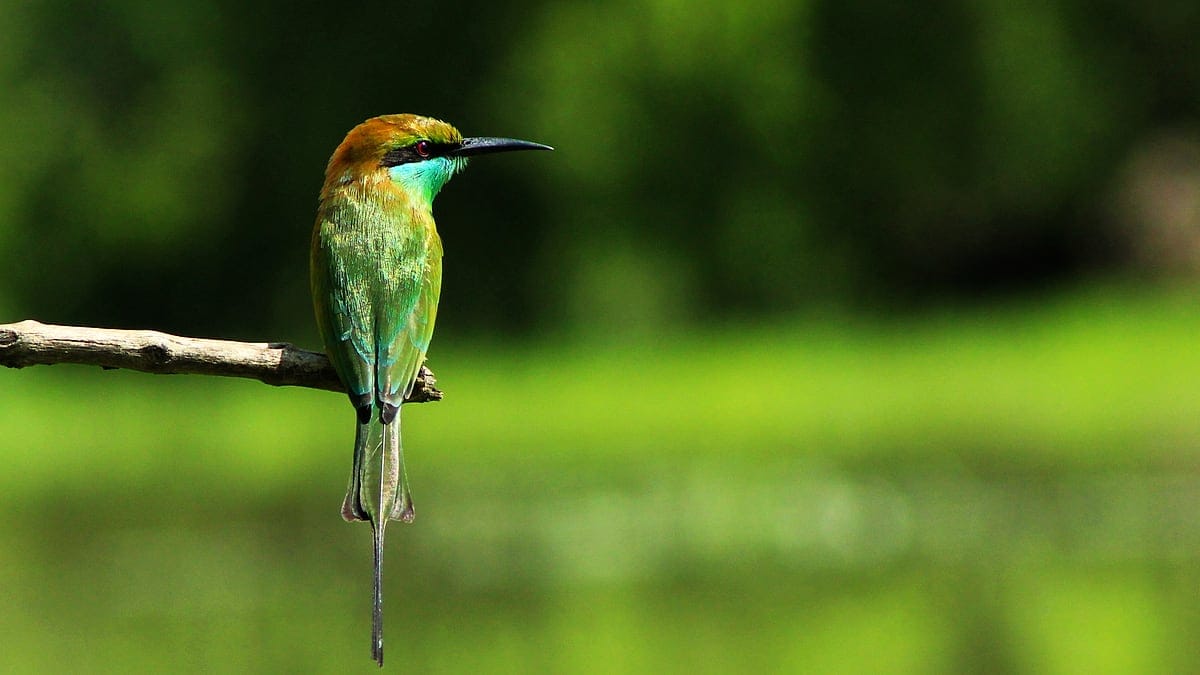
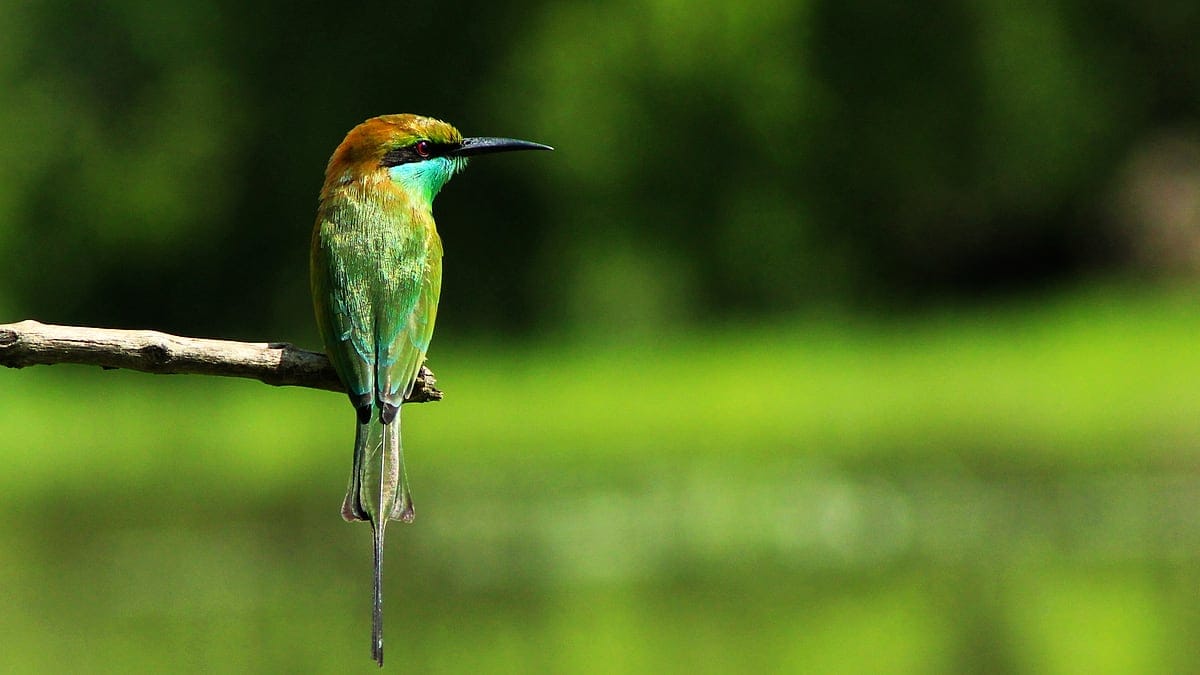
The Green Bee-eater at Yala's Salt Pans
You've probably heard that Yala's bee-eaters are "all the same bird." They are not. Most visitors clock one flash of green and move on, assuming it's the species they half remember from a brochure. In fact Yala holds at least two common bee-eaters side by side, and the smaller, scruffier-looking one that perches low around the salt pans is a different animal with a different story.
That bird is the green bee-eater, sometimes called the little green bee-eater. It is resident year-round, which already sets it apart from some of the park's more seasonal birdlife. It does not migrate off to breed elsewhere and does not vanish for half the year. It is simply always there, which is probably why guides mention it so little. Rarity sells. Permanence doesn't.
Why the Salt Pans Specifically
Yala's salt pans, the shallow, exposed flats near the coastal stretches of the park, are an odd habitat on paper. Bare ground, scattered low scrub, a lot of glare, not much shade. It doesn't look like prime birding territory next to the greener blocks further inland.
That bareness is exactly the appeal. Green bee-eaters hunt by sight, launching short sallies from a low perch to snatch a flying insect and return to the same spot. Open ground with isolated perches, a dead twig, a fence wire, a half-buried stick, gives them a clear sightline in every direction and nowhere for prey to hide. Dense forest understorey is actually worse for this hunting style. The salt pans, stripped of clutter by salt and sun, function almost like a stage built for the bird.
The insects help too. Salt pan margins and the drier lagoon edges nearby tend to concentrate dragonflies, bees and small wasps, especially in the hours either side of midday when the heat brings insect activity up off the ground. Exact density figures for insect life in this microhabitat aren't something the park tracks, but the pattern of bee-eater activity clustering here rather than in the thicker scrub is consistent and easy to observe on repeated visits.
Telling It Apart From Its Cousin
This is where most first-time visitors go wrong, and where Yala's Blue-tailed Bee-eater and the Flocks That Follow Your Jeep is worth reading alongside this one. The blue-tailed bee-eater is larger, more social, often seen wheeling in loose flocks that trail jeeps to pick off insects stirred up by the vehicle. The green bee-eater does none of that. It is smaller, more solitary or found in loose pairs, and distinctly more sedentary in its perching habits. It will sit on the same wire or twig for long stretches, make a sortie, and come straight back, rather than circling in a group.
Colour is the giveaway once you know to look. The green bee-eater is a more uniform, slightly duller green overall, with a thin black line through the eye and a subtle bluish wash on the throat in good light. It lacks the obvious bright chestnut crown and the more vivid blue rump patch that make the blue-tailed bee-eater easier to spot at distance. The tail is also shorter and less deeply forked, without the long twin streamers the blue-tailed species shows in adult plumage.
If you are only glancing from a moving jeep, the quickest working rule is this: flocks wheeling over the track, following the vehicle, are very likely blue-tailed. A lone bird sitting quietly on a fence post near open, bare ground is far more likely to be the green bee-eater.
Breeding and Behaviour Around the Pans
Green bee-eaters nest in burrows, tunnelling into sandy banks or flat open soil, a habit shared with many bee-eater species worldwide. The loose, salt-crusted earth around Yala's pans and adjoining tracks is workable enough for this, and nesting activity tends to pick up in the drier months when the ground is firm but not rock hard. Exact timing varies year to year with rainfall, so it's best treated as a general seasonal tendency rather than a fixed calendar date.
Like other bee-eaters, this species deals with its prey's stingers by beating the insect against the perch before swallowing, a behaviour you can sometimes catch on camera if you're patient and the bird has settled into a predictable perch-and-return rhythm. Watching one bird for ten minutes rather than chasing the next sighting is usually more rewarding here than almost anywhere else in the park, simply because the bird's habits are so routine.
They are also surprisingly tolerant of close observation if the vehicle stays still. Unlike raptors or larger waders that flush at the first sign of movement, green bee-eaters around the salt pans often continue hunting within easy camera range of a parked jeep, provided nobody is leaning out or raising voices. It is one of the more forgiving subjects for photographers still learning to work with a telephoto lens from a vehicle.
Practical Notes for Spotting Them
The best light at the salt pans tends to be early morning and late afternoon, when the low sun catches the bird's colour properly instead of washing it out under the flat midday glare that gives the pans their bleached, overexposed look in photographs. Midday is still a reasonable time to find the birds hunting, since insect activity peaks with the heat, but the images will be harsher.
Bring a long lens if photography is the goal. The green bee-eater is small, and its preferred open, perch-and-sally habitat means it is often sitting further from the track than you'd like. A monopod or simply bracing against the jeep frame helps more than it sounds like it would, since the bird's stillness between sorties gives you time to steady a shot that a faster-moving subject wouldn't allow.
This is also a useful bird to look for on the way in or out of the park, since salt pan habitat often sits near the coastal approach roads rather than deep inside the restricted blocks, making it one of the easier Yala specialities to see without committing to a full day's safari.
Sources
- Department of Wildlife Conservation Sri Lanka
Ready to see it for yourself?
Book a safari