 YALA
Two Dens, Two Clocks: The Golden Jackal and the Striped-Necked Mongoose in Yala's Scrub
You've probably heard that Yala's smaller predators all behave more or less the same way: dig a hole, raise some young, move on. We checked. The golden jackal and the striped-necked mongoose, two of the most commonly seen mammals in the park's thorn scrub, run on almost opposite body clocks, and their den sites reflect it.
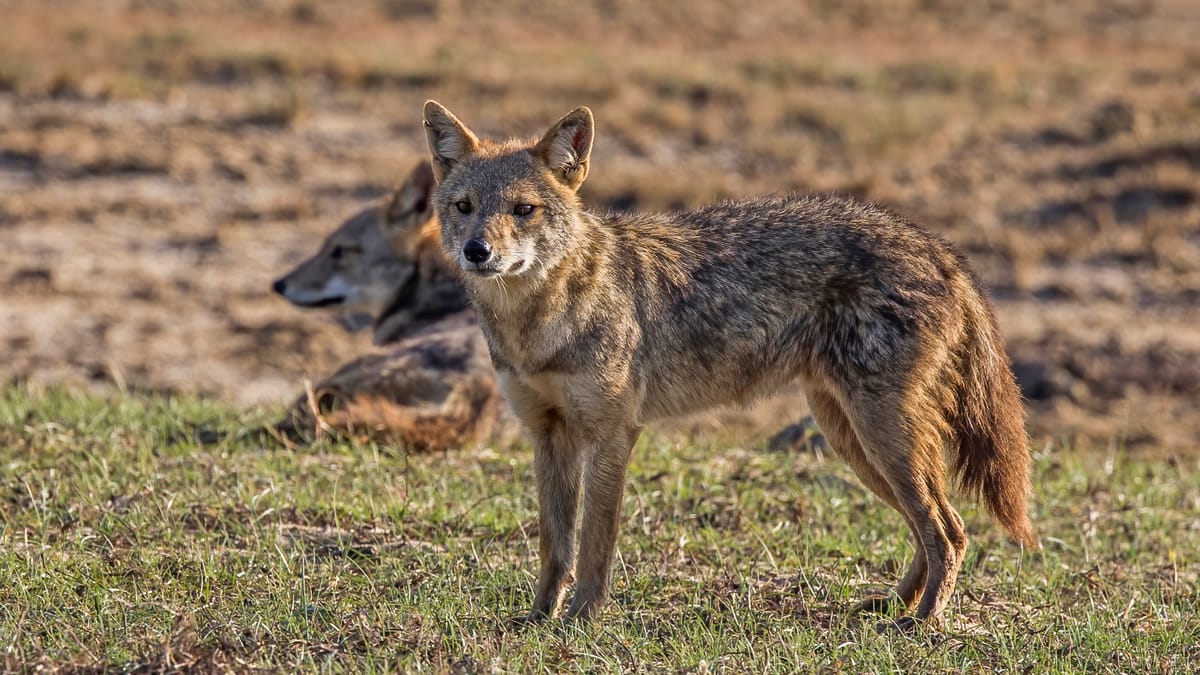
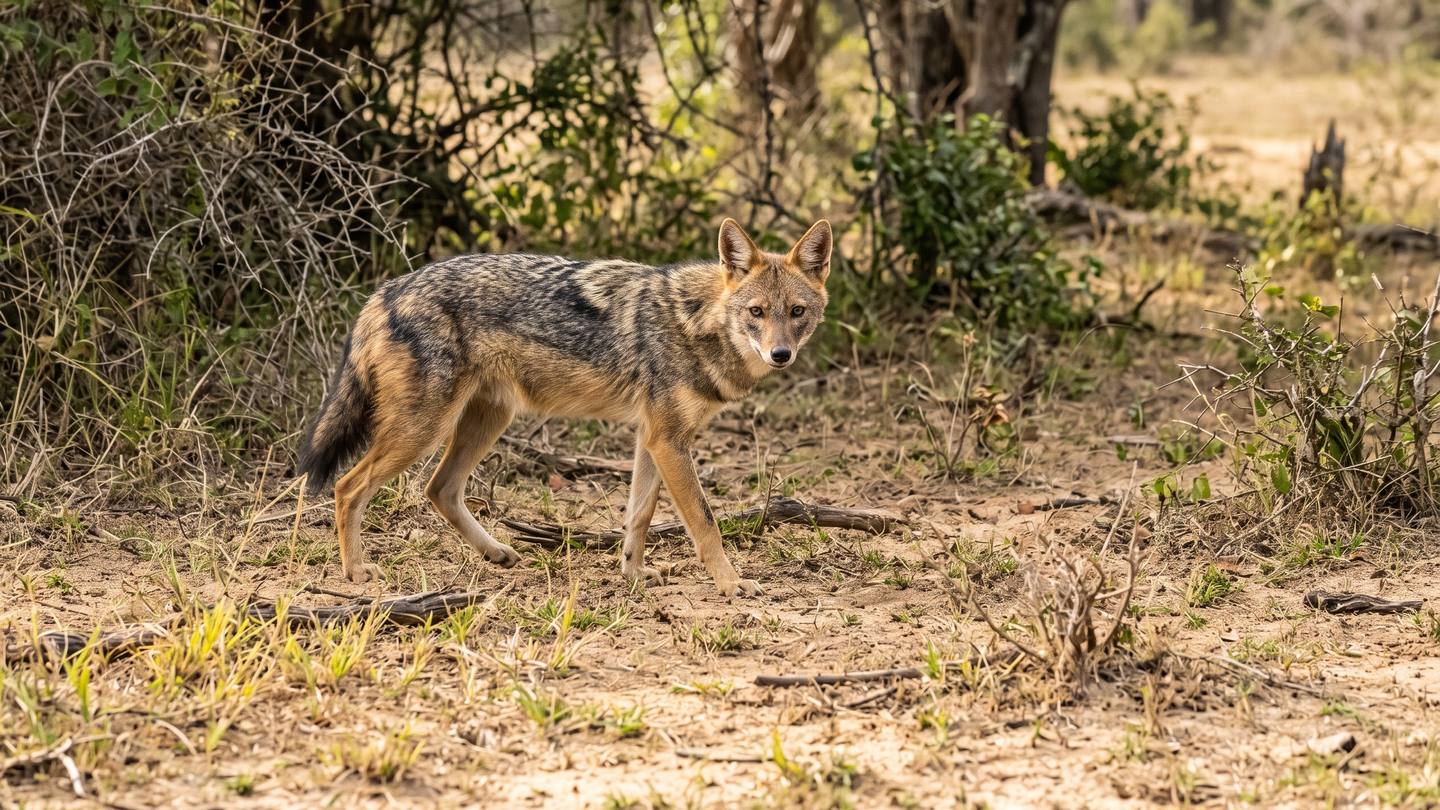
Get this one straight before anything else: the golden jackal (Canis aureus) is largely nocturnal and crepuscular, most active from dusk through the small hours and again at first light. The striped-necked mongoose (Herpestes vitticollis), by contrast, is a daytime forager, hunting in the heat of the morning and retreating to shelter well before dark. Same scrub, same thorn thickets, completely different shifts.
The Jackal's Night Shift
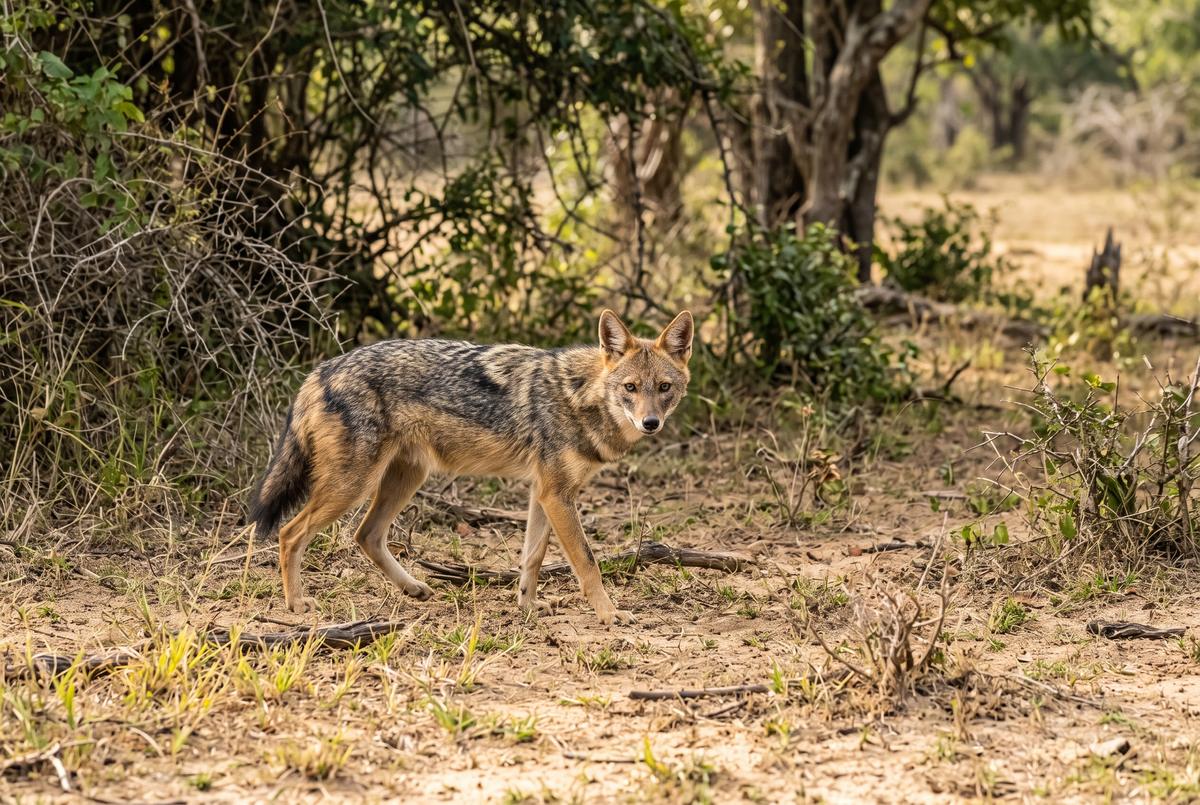
A jackal den in Yala is rarely a single tidy burrow. Pairs typically maintain several den sites within a territory and rotate between them, often enlarging an existing structure rather than digging fresh from scratch. Old termite mounds, abandoned porcupine burrows and the collapsed tunnel systems left by water monitors are all recycled. This matters practically: a den that looks freshly excavated in Block I's drier blocks may actually be decades old in origin, just reopened for the season.
Breeding in Sri Lankan golden jackals tends to cluster in the drier months, broadly December through March, when scrub cover is lower but prey (small mammals, ground birds, carrion from leopard kills) is still reasonably predictable. Litters average two to four pups. Both parents, and sometimes older offspring from a previous litter, help provision the den, which is one reason jackal packs in Yala sometimes look like loose family groups rather than the classic monogamous pair.
Because the species hunts and travels mostly after dark, den entrances are usually sited with cover in mind rather than sun exposure, tucked under Salvadora or Manilkara thickets rather than out in open pans. A jeep passing at 6pm near Buttuwa or along the tracks toward Uraniya tank has a reasonable chance of catching jackals emerging for the evening's foraging run, tails low, moving in that unhurried trot that looks lazy and isn't.
The Mongoose's Day Shift
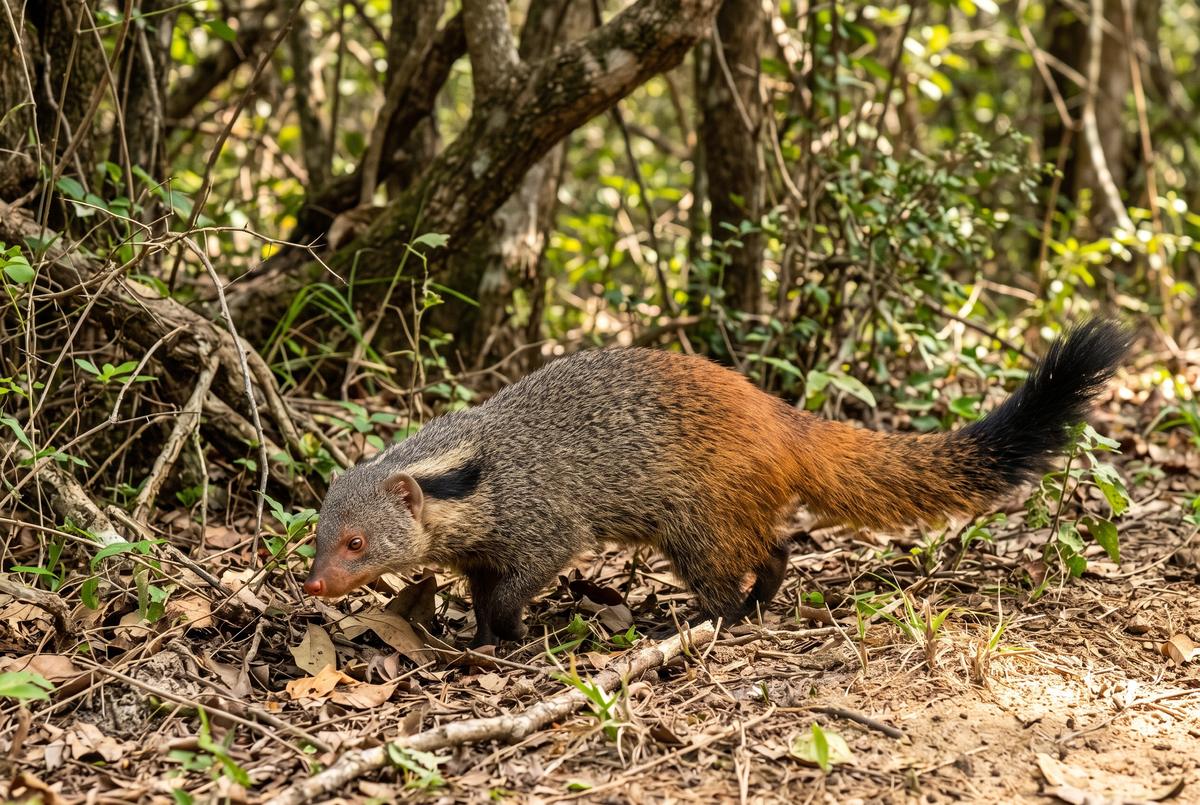
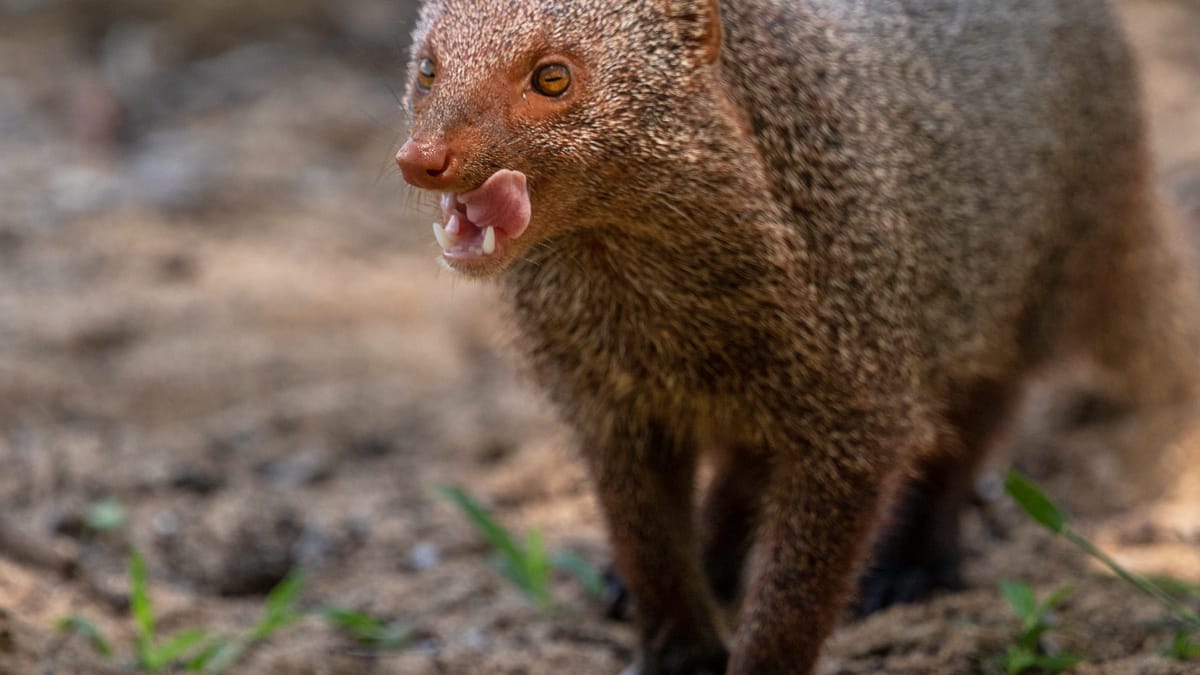
The striped-necked mongoose flips that entire pattern. It dens in rock crevices, hollow logs and dense root tangles, and it does almost all of its den-related activity, emerging, foraging, retreating, in daylight. This is the largest of Sri Lanka's mongoose species and a genuinely satisfying sighting: a rich chestnut-brown coat with a distinctive black stripe running down the side of the neck, often seen working along watercourses and tank bunds rather than open grassland.
Unlike the jackal's social dens, striped-necked mongoose denning is largely solitary or limited to a female with young. Den sites tend to sit closer to permanent or semi-permanent water, the margins of the Menik Ganga and the smaller seasonal streams that feed Yala's tank system, because much of this mongoose's diet leans toward crabs, frogs and other water-associated prey rather than the drier scrub fare a jackal takes.
The practical upshot for visitors: daytime game drives, especially mid-morning once the early leopard rush has quietened, are actually prime striped-necked mongoose time. It is one of the few mid-sized predators where a midday safari slot isn't a consolation prize.
Why Two Clocks Share One Patch of Scrub
Yala's thorn scrub is not a big place to hide a den. Jackal and mongoose territories overlap constantly, and the reason this doesn't cause constant conflict comes down almost entirely to timing. A den abandoned by a mongoose at dusk can, in principle, be investigated or even briefly used by a passing jackal overnight, and vice versa at dawn. Field observers across the subcontinent have noted this kind of temporal den-sharing in other canid-mongoose pairings, though we'd stop short of calling it common in Yala specifically; it has not been rigorously studied here and the claim deserves that caveat.
What is better documented is that old burrow systems in Sri Lanka's dry zone get passed through an entire chain of tenants over the years. Monitor lizards dig them, porcupines widen them, jackals and mongooses both use them at different points, and occasionally an Indian python, which also occurs in Yala's scrub and favours disused burrows and rock crevices as daytime retreats, will take over the same real estate entirely. The python is nonvenomous and typically far too large and sedentary to compete with either mammal for the den itself, but a young jackal pup or mongoose kit denning too close to an occupied burrow is, bluntly, at some risk. It is one of the quieter food-chain realities of the scrub: the den that shelters you from the midday sun can also be shared, at a time lag of hours, with something considerably larger.
Spotting Both on the Same Drive
The honest answer is that most visitors see jackals far more often than striped-necked mongooses, simply because jackal activity overlaps with the two safari windows DWC actually permits, early morning and late afternoon. The mongoose's fully daytime habits mean it's often most active during the midday lull between game drives, when fewer vehicles are in the park.
Your best chance at both in a single visit is a dawn drive followed by a slow, unhurried look along water-adjacent scrub later in the morning, rather than racing toward a leopard sighting the whole time. Den entrances themselves are worth scanning for even without an animal present: a jackal den tends to show multiple entrances and a well-worn apron of bare earth, while a mongoose retreat is often a single, tighter opening wedged into rock or root, with far less visible wear because the occupant isn't dragging prey carcasses in and out the way a provisioning jackal pair will.
If you want the deeper dive on the jackal itself, including pack structure and vocalisations, see The Sri Lankan Jackal in Yala. For the mongoose family more broadly, The Ruddy Mongoose in Yala covers the smaller, more commonly confused relative that shares much of the same ground.
Sources
- Indian python, Wikipedia (https://en.wikipedia.org/wiki/Indian_python)
- Department of Wildlife Conservation Sri Lanka
Ready to see it for yourself?
Book a safari