 YALA
YALA
The Leopards of Block I
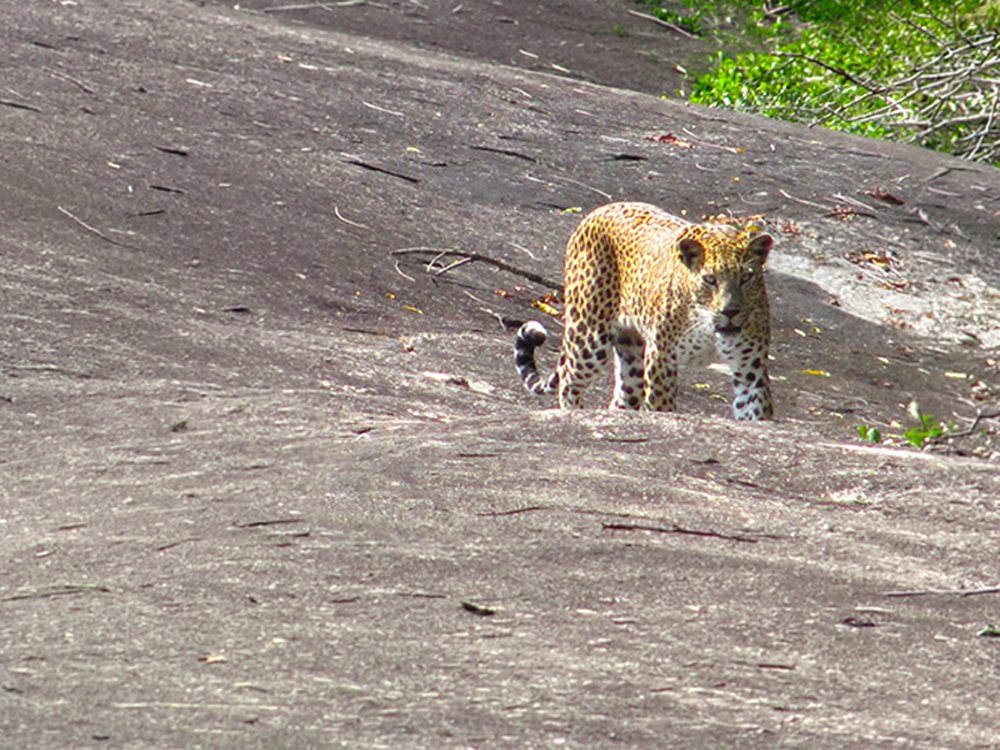
The Sri Lankan leopard (Panthera pardus kotiya) sits at the top of Yala's food chain with no competition (no tigers, no lions), and it behaves like it. In most of the world leopards are ghosts. In Block I they hunt in daylight, drape themselves across granite boulders in the morning sun, and cross the track in front of you as if the jeep were furniture.
Why the density is so high
Block I covers 14,101 hectares of forest, tank, waterhole and lagoon, a patchwork that concentrates prey. With an estimated 25 leopards in this one zone, territories overlap tightly, and the absence of a larger predator means cats move openly. Researchers regard it as one of the highest leopard densities recorded anywhere.
When to look
April through July is the window. Water levels drop, the grass is short, and animals cluster around the shrinking waterholes, the same places leopards patrol. First light and the last hour before the gate closes are the active edges of the day; through the midday heat the cats rest deep in shade.
How a tracker changes the odds
An experienced tracker is not a formality. They read alarm calls (the bark of a spotted deer, the shriek of a peacock, the sudden silence of monkeys) and hold constant radio contact across the park. That network is the difference between driving hopefully and driving toward something. And patience is part of the craft: you might sit in silence for a long stretch. That is the park working as it should.
One caveat worth saying plainly: wildlife does not run to a timetable. People spot leopards on storm-green mornings in November when the guidebooks said stay home. Come with the odds in your favour and the expectations loose.
A different story in Block II
Cross into Block II, toward the Menik Ganga and the Kumbukkan Oya, and the same species turns shy again: dense scrub, no habituation, sightings measured in seconds rather than minutes on a rock. Yala Block 2: the raw reality beyond the Menik Ganga covers what that isolation actually looks like, and what it costs to reach.
If a big-cat sighting is your priority, see when to visit Yala for the seasonal detail, then book a dawn safari.
Ready to see it for yourself?
Book a safari