 YALA
YALA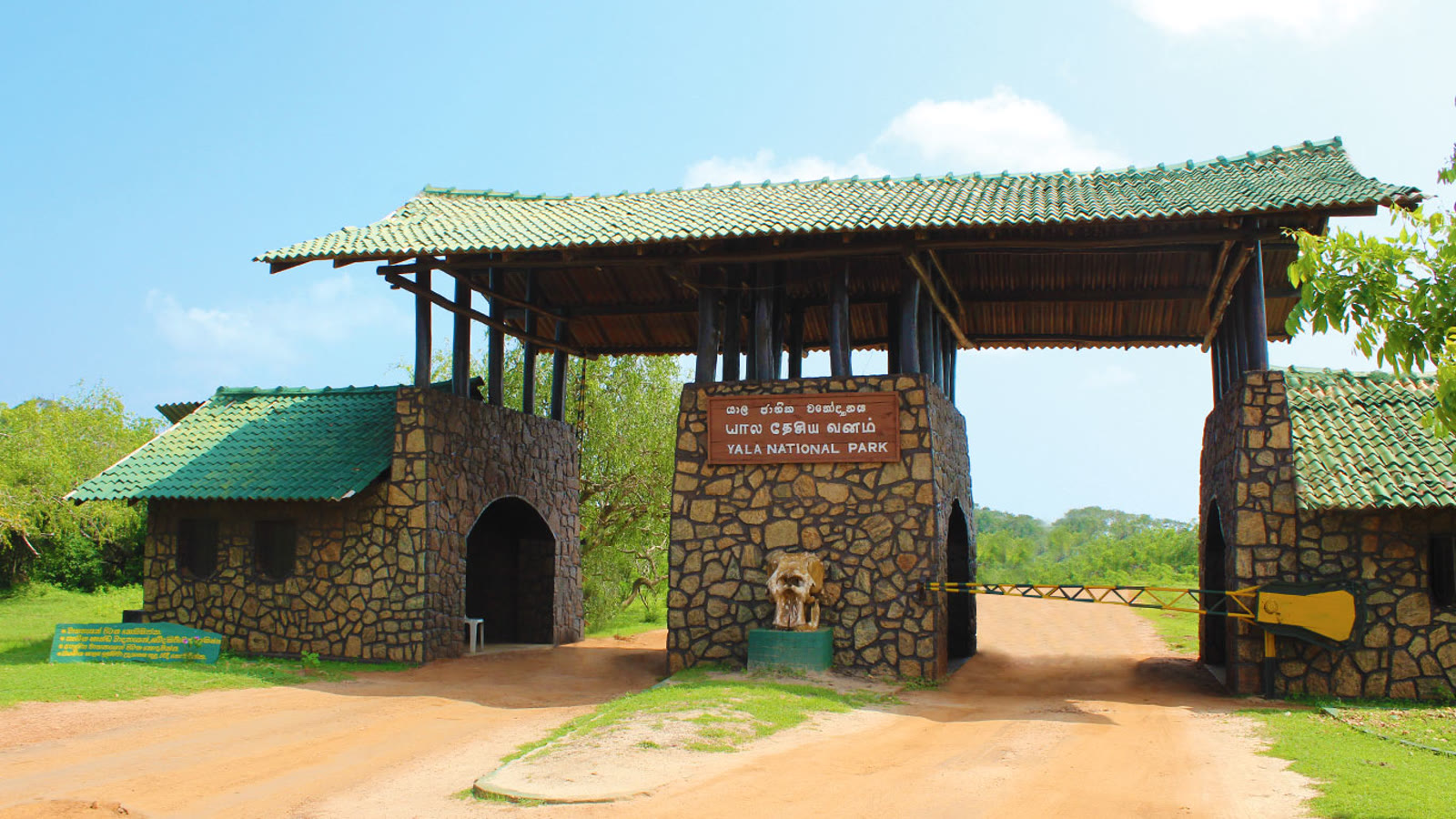
The park
Enter on its terms.
979 km² of dry-zone wilderness across five blocks and three gates, established as a national park in 1938. Here is how it works, and how to move through it well.
The seven rules
- 06:00–18:00. Gates open at first light, close at last. No exceptions.
- Tracker mandatory. One experienced tracker rides in every vehicle.
- Stay in the jeep. Feet on the floor, the whole run. Designated stops only.
- 25 km/h. The park speed limit. Convoys and off-track driving are banned.
- Silence carries. No horns, music, shouting or whistling at wildlife.
- Nothing in, nothing out. No feeding. No flash. No single-use plastic.
- Blocks I & II close 14 Sep–15 Oct. Annual dry-season drought closure. Blocks IV and V stay open throughout.
Five blocks, three gates
Block I
One of the highest recorded leopard densities anywhere on Earth: roughly 25 cats hunting in daylight across a single zone.
Not sure which block to book? Block I vs Block V, side by side →
The landscape
Monsoon forest
Moist and dry monsoon forest concentrates along the Menik River, sheltering leopard and sloth bear among granite boulders.
Pelessa grasslands
Open coastal parkland where elephant, buffalo and spotted deer graze in the early light.
Tanks & waterholes
Maha Seelawa, Buthawa and Uraniya hold the water that pulls every animal into the open through the dry season.
Lagoons & coast
Brackish lagoons and the restless edge at Patanangala Beach, nesting ground for all five globally endangered sea turtles.

979 km² of wilderness
This is what five blocks and three gates actually look like.
Granite, grassland, lagoon and coast, all inside one park boundary.
Where to spot the big three
Elephant, leopard and sloth bear each favour different ground in Block I. Filter the map below to see where trackers most often find each one.
A stylised guide to where each species is most often seen in Block I. Sightings shift with season and water levels; your tracker reads the day's conditions.
Meet the leopard
Sri Lanka's apex predator, in ninety seconds. Block I's most-photographed resident.
Questions people ask
When is the best time to visit Yala National Park?
The dry season, roughly May to September, is the strongest window: animals concentrate around the shrinking waterholes as vegetation thins, so sightings come easier. Blocks I and II close every year from 14 September to 15 October for the dry-season drought closure, so late August and early September is often the sweet spot before that window opens. Blocks IV and V stay open right through it if your dates land inside the closure.
Which block should I book first?
Block I, for a first visit. It holds the park's highest leopard density, an estimated 25-plus resident cats, along with the widest range of terrain in one accessible area. Been before, or want fewer jeeps on the track? Blocks IV and V through the Galge gate cover similar wide forest and granite country at a flat surcharge over the base rate, with a fraction of the traffic.
Do I need to book a tracker separately?
No. An experienced tracker rides in every vehicle by park rule, it's built into every rate here, not an optional extra.
What actually happens if a leopard is spotted at Block I?
Word travels over jeep radios fast, and thirty to fifty vehicles can converge on one clearing within minutes at peak dawn and dusk hours. It's a real part of the park's most popular ground. A full-day booking, or a block IV or V zone instead, sees a fraction of that traffic.
Can I get out of the jeep inside the park?
Only at designated stops. Feet stay on the floor for the rest of the drive, both for wildlife safety and because Yala is genuinely wild ground, not a managed reserve built around close encounters.
Hover a block · tap to set your zone
Book a safari.
Sixty seconds to request. Your total includes DWC park tickets and fees.