 YALA

The Indian Peafowl's Nemesis: Yala's Shikra and Other Raptors Preying on Juveniles
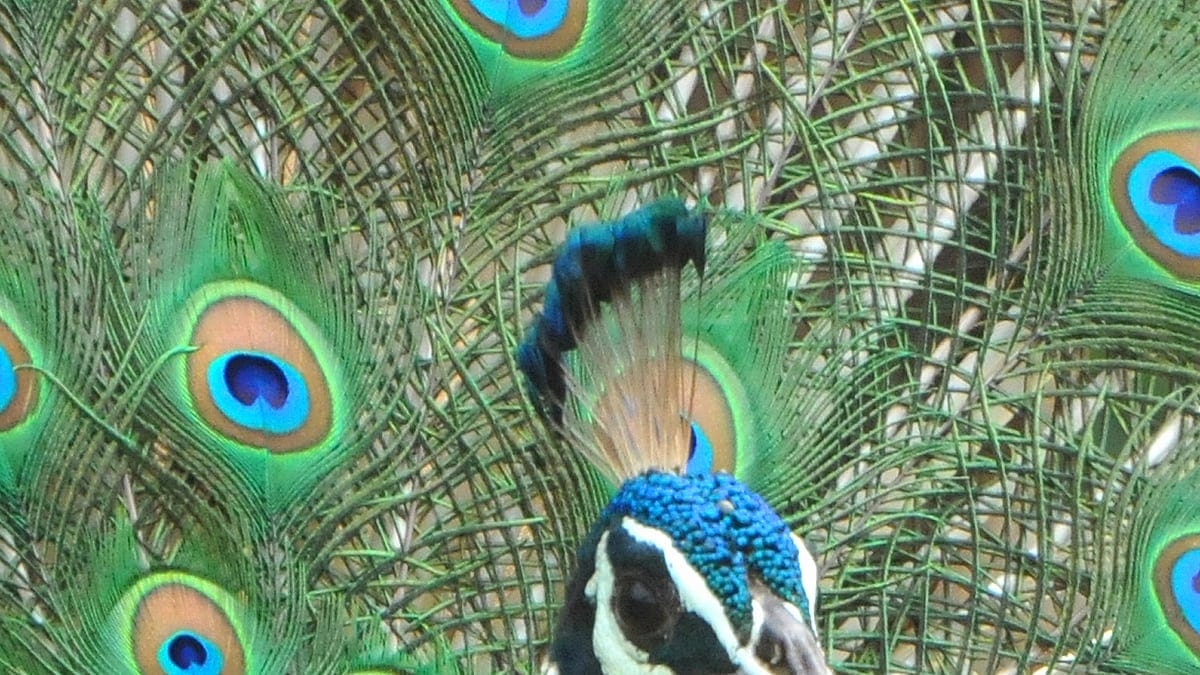
Everyone photographs the adult peacock. Nobody photographs what happens to his chicks six weeks after hatching.
Indian peafowl in Yala look like they own the place: strutting across tracks, fanning trains in front of jeeps, utterly indifferent to engines. That confidence is earned by adulthood, not granted at birth. A newly hatched peachick weighs a few dozen grams, can't fly for roughly two weeks, and spends its most dangerous months within striking range of a bird most visitors never notice: the shikra.
A Small Hawk with a Big Appetite
The shikra (Tachyspiza badia) is unremarkable at first glance. It's a compact accipiter, barely larger than a pigeon in the male's case, grey above with fine barring below, the kind of bird you'd dismiss as "just a hawk" if your guide didn't point it out. It's found right across Asia and into Africa, where it goes by "little banded goshawk" and may, by some taxonomic arguments, deserve species status of its own.
What makes it dangerous to small prey isn't size. It's method. Shikras hunt from cover, perching motionless in dense foliage before launching a short, explosive dash, then switching to the flap and glide rhythm typical of accipiter hawks once they're committed to the chase. They don't soar and scan like a buzzard. They ambush. That style suits Yala's thorn scrub perfectly: dense, low, full of blind corners where a sparrowhawk-sized predator can sit twenty feet from a peahen's brood and never be seen until it's too late.
Like most raptors, female shikras outweigh males by a wide margin, a difference widely reported across the accipiter family as a way to split the available prey base between the sexes. The practical result in Yala is that a shikra pair isn't limited to one size of target. Males typically take smaller birds, lizards and large insects. Females can handle something closer to the bulk of a half-grown junglefowl or peafowl chick.
Why Chicks, Specifically
Adult peafowl are a poor match for a shikra. They're too big, too alert, and the cock's spurs aren't worth testing. Chicks are a different proposition entirely: small, slow, and for their first couple of weeks, flightless. Peahens nest on the ground, usually a shallow scrape in tall grass near water, and the brood follows her on foot from day one rather than staying in a protected nest. That precocial strategy works well against ground predators that the hen can see coming. It works far worse against something that drops out of the canopy.
Breeding in Sri Lanka's dry zone is generally reported to cluster around the months leading into and through the southwest monsoon's dry-zone effects, broadly January through June, though exact timing shifts with rainfall and isn't fixed to a calendar. What matters for a visitor is simpler: during this window, Yala's peahens are leading vulnerable broods through exactly the kind of scrub, like the thickets around Buttuwa and Talgasmankada in Block I, where shikras already prefer to hunt. The two patterns overlap by habitat necessity, not coincidence. Water draws peafowl. Cover draws shikra. Both converge on the same tank-edge vegetation.
The Impersonators
One of the stranger facts about the shikra has nothing to do with hunting at all. Its sharp, two-note call is mimicked by drongos, the small black birds that follow grazing animals and mixed-species flocks through Yala's scrub. A drongo that sounds the shikra's alarm can clear a feeding area of smaller birds in seconds, then help itself to whatever food they abandoned. It's a form of vocal theft that only works because the shikra's call carries real authority among the birds that fear it.
Even stranger: the common hawk cuckoo, a species some visitors know by its old nickname "brainfever bird" for its relentless rising call, has evolved plumage that closely resembles a shikra's. This is widely thought to be a form of mimicry that helps the cuckoo slip past host birds while it looks for nests to parasitise, trading on the same reputation the shikra has built through genuine hunting pressure. In other words, an entire local mimicry complex, drongos borrowing its voice, cuckoos borrowing its look, exists because the shikra is a credible threat. That's a reputation peafowl chicks pay for directly.
Bigger Wings, Same Target
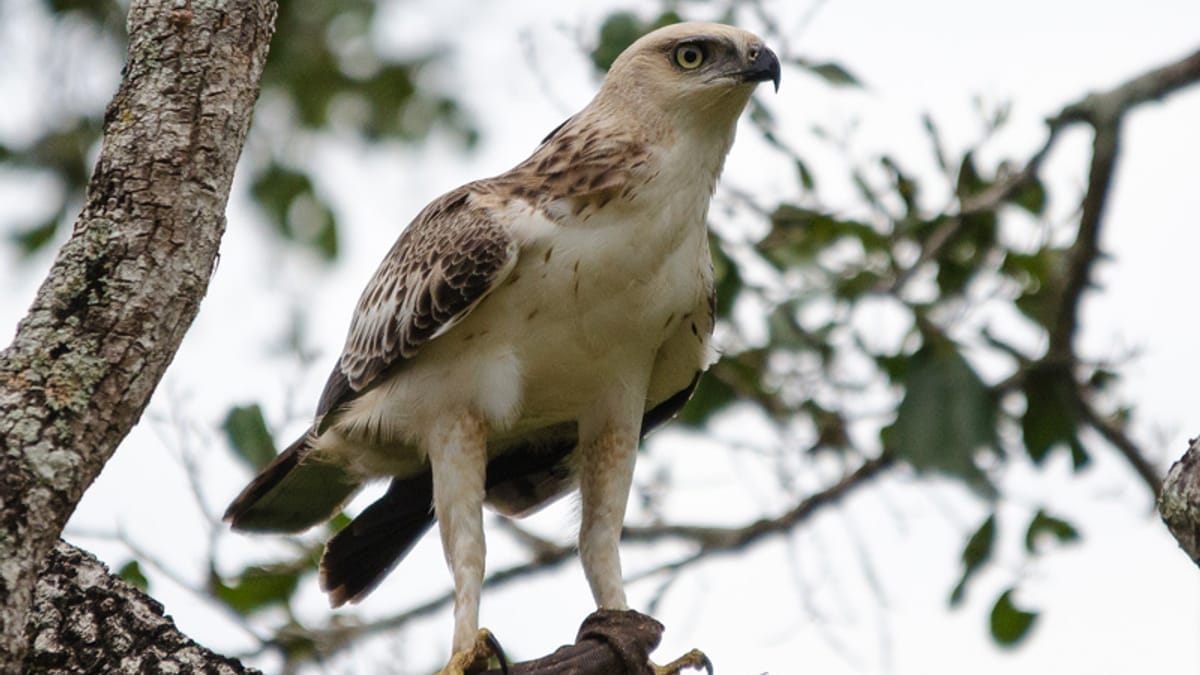
Shikra aren't the only raptors with peafowl juveniles on the menu. Yala's changeable hawk-eagle, considerably larger with a wingspan several times a shikra's, is a known predator of junglefowl and young peafowl, and has the reach to take prey a shikra couldn't manage. The crested serpent eagle, despite its name suggesting a reptile specialist, is opportunistic enough to take a slow-moving chick if the easier option of a snake or lizard isn't available. Neither species relies on peafowl the way a shikra might during the breeding window, but both add to the pressure a brood faces in its first two months.
The honest picture is a layered one: shikra working the low cover close to the ground, hawk-eagles watching from height for anything caught in the open, serpent eagles taking opportunistic hits. No single raptor is "the" threat. Together they make the gap between hatching and flight the most dangerous stretch of a peafowl's life, arguably more dangerous than anything it will face as an adult outside a leopard's immediate reach.
Watching For It on Safari
This isn't a spectacle you can schedule, and trackers won't promise it. But knowing the pattern changes what you look at. A peahen moving unusually fast through grass, calling sharply, with a visibly reduced number of chicks trailing her compared to an earlier sighting, is a legitimate clue that a raptor has already made a pass. Scanning the mid-canopy of trees bordering tank edges, rather than just the water itself, is how experienced trackers spot a perched shikra before it moves. Early morning, before the day heats up and larger raptors take to thermals, tends to favour shikra activity specifically, since it hunts by ambush rather than by soaring.
If you're planning a visit around the breeding window, it's worth pairing this with a look at When to Visit Yala for how the dry season shapes visibility generally, and at The Changeable Hawk-Eagle in Yala and The Crested Serpent Eagle in Yala for the two larger raptors sharing this pressure. The peacock fanning his train for your camera, discussed in more detail in Yala's Peafowl Courtship Displays, is the survivor of exactly this gauntlet. Most of his clutch-mates didn't make it that far.
Sources
- Shikra, Wikipedia, https://en.wikipedia.org/wiki/Shikra
- Department of Wildlife Conservation Sri Lanka
Ready to see it for yourself?
Book a safari