 YALA
YALA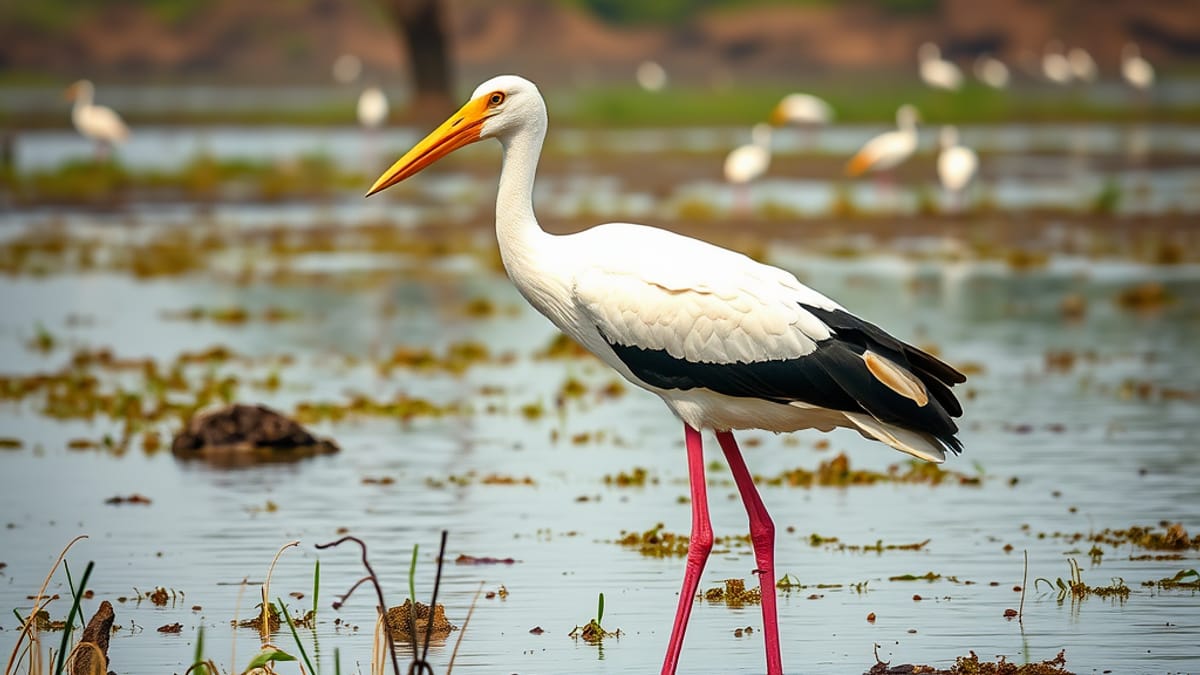
The Painted Stork Colonies of Yala's Wetlands
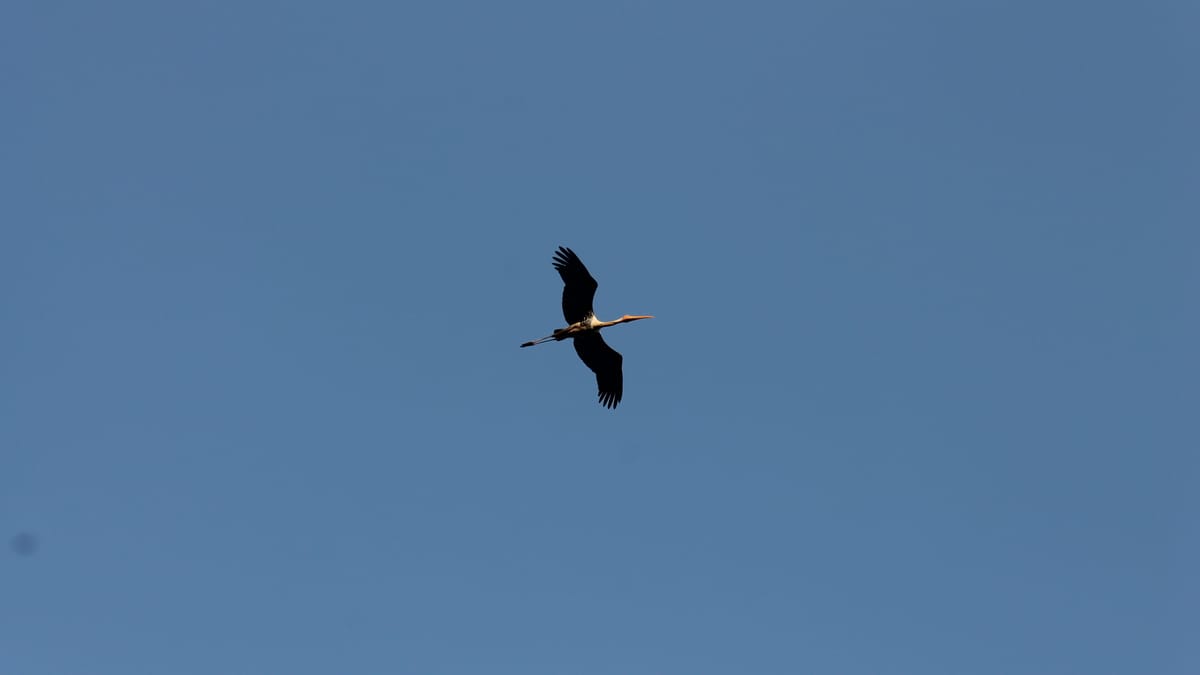
You've probably heard that Yala is a leopard park with birds as an afterthought. Spend a morning at one of its tanks during the right season and that framing collapses fast. The Painted Stork, with its dipped orange bill and pink tertial feathers, is one of the park's most visually startling residents, and it doesn't visit in twos and threes. It gathers in colonies.
That word matters. A colony isn't just a crowd of birds sharing a lake. It's a breeding and roosting strategy, and Yala's wetlands happen to offer exactly the conditions Painted Storks need to make it work.
Why Storks Choose Yala's Wetlands
Painted Storks are large wading birds built for hunting in shallow water. They wade through tanks and lagoon margins with their bills half open, sweeping side to side, snapping shut the instant they touch a fish. This is a tactile hunting method, not a visual one, which is why murky, fish-rich shallows suit them better than clear deep water.
Yala's network of ancient irrigation tanks, natural lagoons and seasonal wetlands gives them exactly that. Many of these tanks were built or restored centuries ago for agriculture long before the area became a protected park, and they still fill and shrink with the monsoon cycle. As water levels drop through the dry months, fish get concentrated into smaller pools. For a wading bird that hunts by touch, that concentration is the whole point. Shrinking water is a feeding opportunity, not a crisis.
This is also why stork numbers at any single tank can swing wildly through the year. Exact population figures for Yala's Painted Storks aren't publicly tracked in the way leopard sightings are, so it's worth being cautious about any number you see quoted online. What is well documented across South Asia generally is the pattern: storks follow water and fish density, not the calendar.
Colony Behaviour and Nesting
Painted Storks are colonial nesters, meaning they build stick nests close together in trees standing in or beside water, often alongside other wetland birds such as cormorants, egrets and ibises. This mixed-species crowding isn't accidental. Nesting over water and in numbers gives some protection against ground predators, and the noise and activity of a large colony can make it harder for any single nest to be picked off unnoticed.
In Yala, dead or partly submerged trees at the edges of tanks are often the preferred nesting sites. A colony in full swing is a genuinely loud, chaotic scene: adults arriving with fish, chicks jostling, other waterbirds threading in and out of the same canopy. It's one of the few times in a safari where the soundtrack outcompetes the visuals.
Breeding tends to align with periods when water levels and fish availability are favourable, which broadly means the drier months are often more productive for viewing active colonies, though this shifts from year to year depending on rainfall. If you're planning a visit specifically to catch stork activity, it's worth cross-referencing with a general seasonal guide rather than assuming any single month is guaranteed. Our own When to Visit Yala breaks down the broader seasonal patterns that affect all of the park's wildlife, not just birds.
What Painted Storks Reveal About the Park
It's tempting to treat bird colonies as background scenery on a leopard-focused safari. That undersells what they actually indicate. A healthy, active stork colony is a reasonably good proxy for wetland health generally. It means there's enough fish, enough undisturbed nesting habitat, and enough water security through the dry months to support a demanding breeding cycle.
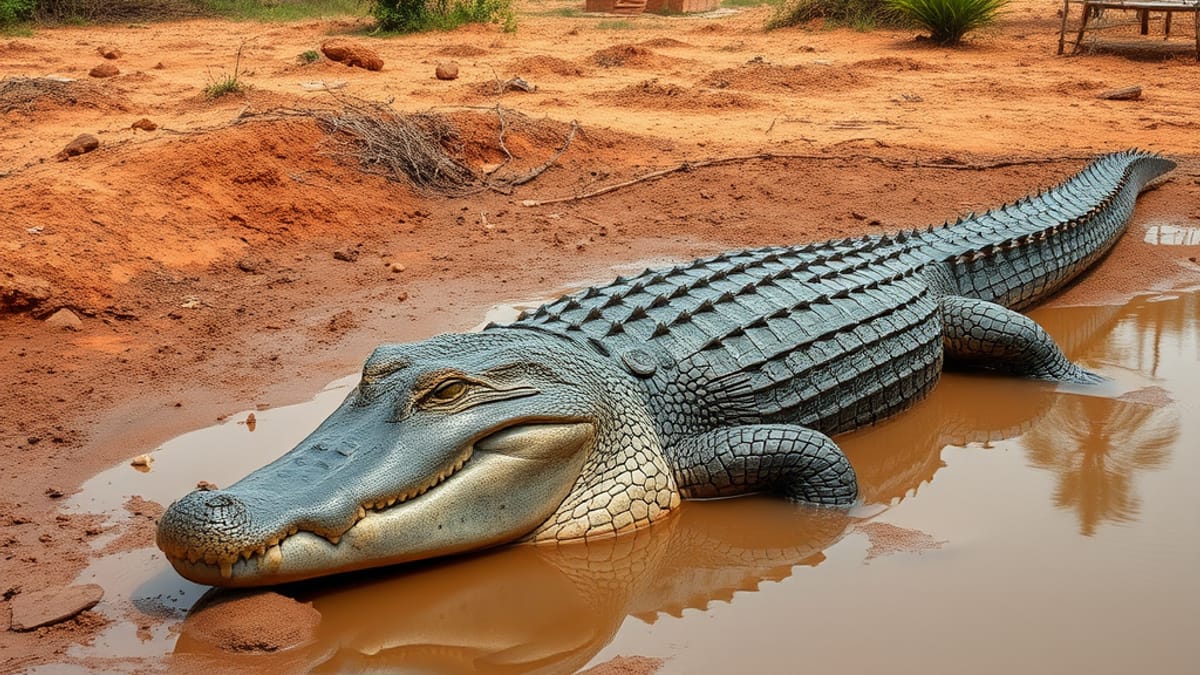
Yala's tanks don't just serve storks either. The same shrinking dry season pools that concentrate fish for the storks also draw in crocodiles, elephants and a long list of other water dependent species, which is part of why the park's tank ecosystems get so much quiet, unglamorous attention from conservation staff. If you're curious about one of the other animals that shares these same tanks, our piece on The Mugger Crocodile of Yala's Tanks covers a very different resident of the same waterline.
Painted Storks aren't rare in Sri Lanka the way a leopard or a sloth bear is rare. But reliable, photographable colonies of this size are genuinely uncommon, and Yala's wetlands are one of the more dependable places in the country to see one functioning at scale. That's not a tourism-brochure claim. It's simply what tends to happen when old irrigation engineering and a protected dry zone wetland are left to run their natural cycle.
For birders specifically, the storks are usually just one part of a much longer wetland list. Our guide to Yala Lagoon and Coastal Birdlife covers the wider cast of species that share these same waters through the year.
Sources
- Department of Wildlife Conservation Sri Lanka
- General ornithological knowledge of Painted Stork (Mycteria leucocephala) ecology and colonial wading bird behaviour in South Asian wetlands
Ready to see it for yourself?
Book a safari