 YALA
YALA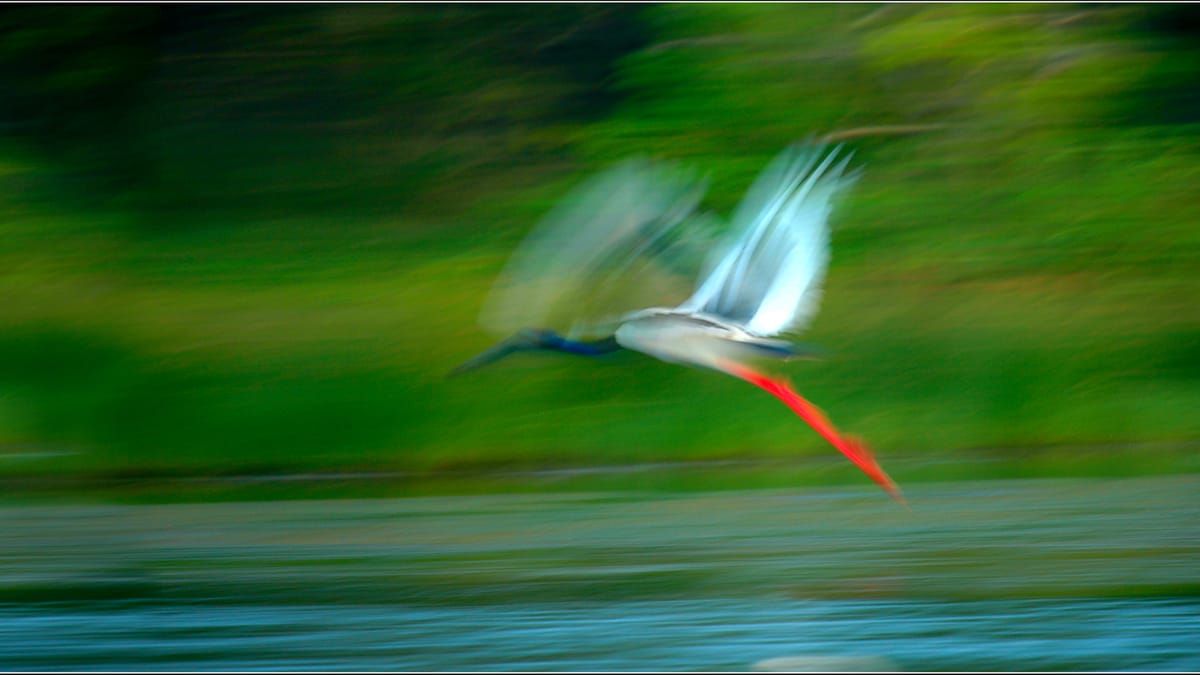
Image: BanduG · Wikimedia Commons (CC BY-SA 4.0)
Yala's Black-necked Stork: Sri Lanka's Rarest Resident Waterbird
Ask a guide to name Yala's rarest bird and half of them will say leopard-adjacent nonsense about eagles. The honest answer, if you push them, is usually the black-necked stork. It's a bird that gets mentioned in every "birds of Yala" checklist and photographed by almost nobody, and that gap between reputation and reality is worth unpacking properly.
Not Your Average Wading Bird
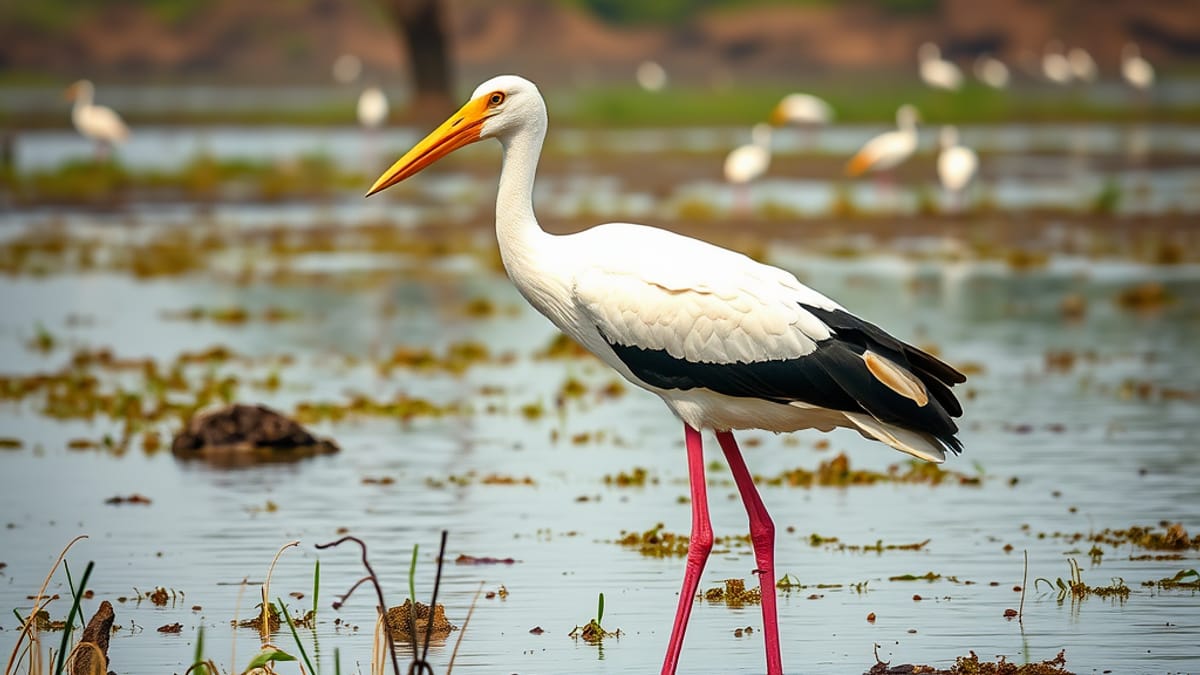
At well over a metre tall, with a neck that seems borrowed from something more architectural than avian, Ephippiorhynchus asiaticus is hard to confuse with anything else on the park's wetlands. The plumage is white body against a head, neck and wing panel of black that flashes green and purple in good light, the kind of iridescence that photographs badly on an overcast morning and spectacularly on a clear one. The bill is heavy, slightly upturned, built for stabbing rather than sifting.
One detail visitors always ask about once they know to look for it: the eyes. Males have dark irises, almost black. Females have pale yellow ones. It's one of the few reliable ways to sex a wading bird at fifty metres without a spotting scope, and once you know it, you'll find yourself checking every stork's eye colour out of habit.
The species ranges across the Indian subcontinent and into Southeast Asia, with a separate population in northern Australia where it's known locally as the jabiru (a name that also belongs, confusingly, to an unrelated stork in Central and South America). Sri Lanka sits near the southwestern edge of that range, and the island's population is small, resident, and not migratory. What you see here is what breeds here.
Why "Rare" Actually Means Rare
Tourism material likes to describe Yala's black-necked stork as an "occasional sighting," which undersells it. There is no formally published, precise DWC count of the resident population that we're aware of, and we won't invent one here. What can be said with confidence is that sightings logged by guides and researchers over recent years put the number of individuals using Yala's wetlands at any one time in the low single figures, not the dozens implied by some brochure copy. This is not a bird you tick off on a good day. It's a bird you tick off on a lucky day, in the right block, in the right season, with a guide who already knows roughly where the resident pair has been holding territory.
That scarcity is partly behavioural. Black-necked storks are strongly territorial, both for feeding and breeding, which is unusual among storks and means a single wetland typically supports only one pair or one solitary bird rather than the loose colonies you get with painted storks. If you've read our piece on the Painted Stork Colonies of Yala's Wetlands, this is the opposite social model entirely. Painted storks tolerate crowding. Black-necked storks actively don't.
Where to Actually Look
The species favours open wetland edges, marshland and the margins of larger tanks, along with adjoining paddy and scrub where prey concentrates. In Yala, that means the Buttuwa area and the wetland margins near Block 1's tank systems are the most consistently reported sites, though "consistently" for this bird still means occasional rather than routine. Sightings have also come from the wilder wetlands deeper into Block 2, which tracks with the bird's general preference for quieter, less vehicle-heavy water. If you've read Yala Block 2: The Raw Reality Beyond the Menik Ganga, you'll already know that fewer jeeps usually means better odds on shy, territorial species.
Season matters more than most brochures admit. The dry months, roughly from May through September, draw the stork toward shrinking pools where fish and amphibians get trapped and concentrated, which makes foraging easier and sightings marginally more likely. Once the northeast monsoon refills the tanks from around October, the birds disperse across a much larger, wetter landscape and become correspondingly harder to pin down. For a fuller seasonal breakdown across species, our When to Visit Yala guide is worth reading alongside this one.
A Genuine Generalist Hunter
Where many wading birds specialise, this stork doesn't bother. It takes fish, frogs, small reptiles, crustaceans, large insects and, when the opportunity presents itself, small mammals and birds. It hunts by wading slowly through shallow water and striking with that heavy bill, sometimes stirring the mud first with a foot to flush prey, a technique shared by several large wading birds worldwide. It will also work the margins of active paddy fields, which is one reason the species is found near cultivated land as often as untouched wetland, in Sri Lanka and across its Asian range alike.
This adaptability is part of why the bird persists at all in a landscape as pressured as the dry zone, but adaptability in diet hasn't translated into adaptability in numbers. Territoriality caps how many pairs a given wetland system can hold, no matter how much prey is available.
Breeding and the Territory Question
Pairs build large stick nests high in isolated trees near their feeding wetland, and because the species defends both feeding and nesting territory, a breeding pair effectively claims a stretch of habitat that excludes other storks of the same species. This is likely a major structural reason Yala's population stays low: the park's wetland network can only support so many exclusive territories before the birds run out of room, regardless of overall habitat quality.
We're not aware of confirmed, published breeding records specific to Yala, and we'd rather say that plainly than manufacture a nesting story the data doesn't support. What can be said is that the species is listed as resident rather than migratory in Sri Lanka, which strongly implies local breeding somewhere in the dry zone's wetland belt, Yala included, even where individual nest sites go undocumented.
The Honest Advice
If a black-necked stork sighting is the single thing you're chasing at Yala, manage your expectations before you manage your itinerary. Go in the dry season, ask your guide specifically about recent reports rather than general habitat, and treat any sighting as a bonus rather than an entitlement. It's a bird that rewards patience and a good pair of binoculars far more than it rewards a long checklist and a short visit.
Sources
- Wikipedia, "Black-necked stork," https://en.wikipedia.org/wiki/Black-necked_stork
- Department of Wildlife Conservation Sri Lanka
Ready to see it for yourself?
Book a safari