 YALA
YALA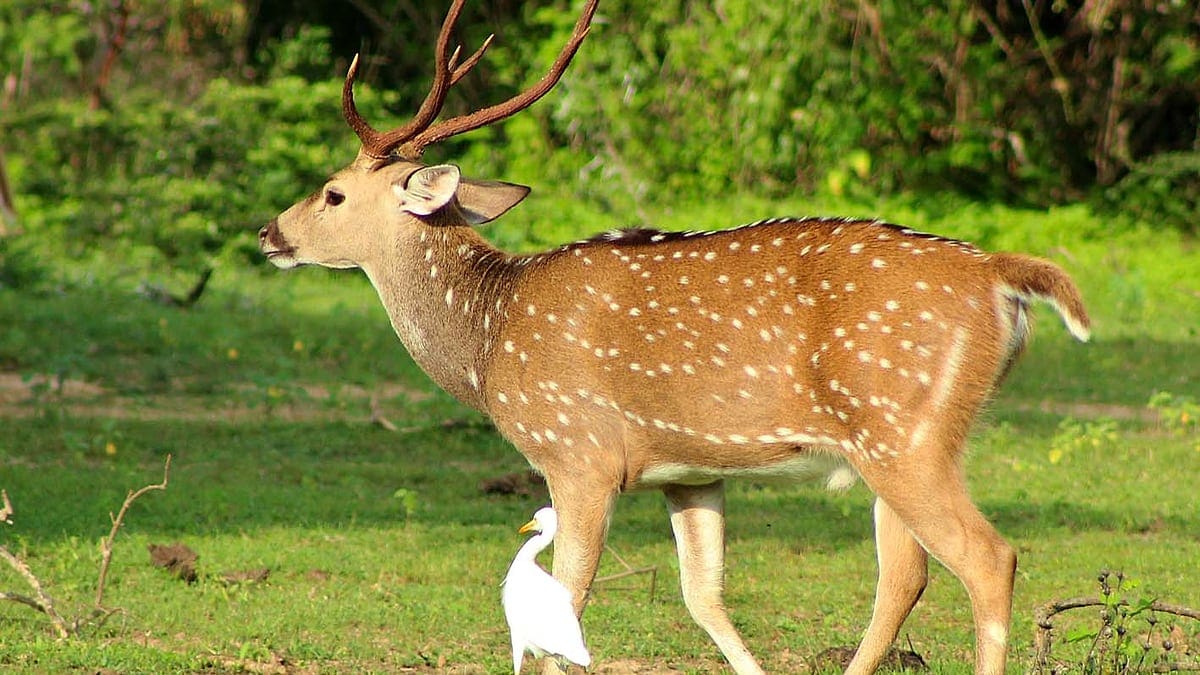
Yala's Spotted Deer Herds and the Alarm Calls That Give Leopards Away
Ask a first-time visitor what they came to Yala for and most will say leopard. Almost none will say deer. That's fair, but it also misses how the park actually works, because the deer are the reason the leopard sightings happen at all.
Spotted deer, known scientifically as Axis axis and locally as chital, are Yala's most numerous large mammal by a wide margin. They move in herds that can run from a handful of animals to fifty or more, and on a single half-day drive through Block I you will pass more of them than every other mammal species combined. Most visitors register them as scenery. Good trackers treat them as an early warning network, and they read it constantly.
What the Deer Actually Look Like
Chital are a handsome, mid-sized deer. Males stand around 90cm at the shoulder and weigh 70 to 90kg, females are noticeably smaller at roughly 70cm and 40 to 60kg. The coat is golden to rufous and stays covered in white spots into adulthood, which is unusual among deer species since many lose their juvenile spotting. The underside, throat, ear linings, tail underside and rump are white, which flashes visibly when a herd bolts, another cue trackers watch for.
Only males carry antlers, three-pronged and reaching close to a metre in length. Antler condition is a rough seasonal clock. Hard, clean antlers generally mean the rut is on or approaching, and stags in hard antler are more likely to be sparring, scent-marking, or trailing females rather than feeding calmly, which changes how a herd behaves and how alert it is.
Why This Species Became the Park's Alarm System
Chital have three things going for them that make them Yala's best early-warning system: numbers, visibility, and paranoia.
Numbers first. Because they are so abundant across the open scrub and grassland patches of Block I in particular, there is almost always a herd within earshot of wherever your jeep happens to be. You don't need to find one deer, you're already near several.
Visibility second. Spotted deer favour semi-open habitat, tank edges, grassy plains and scrub margins rather than dense jungle interior, which is exactly the terrain where a jeep can actually see and hear a reaction unfold. A herd bolting across open ground in front of you is obvious in a way that the same event thirty metres inside thick scrub simply isn't.
Paranoia third, and this is the real mechanism. Chital are a primary prey species for both leopard and, less often, sloth bear, and that pressure has made them extremely responsive animals. A chital herd rarely waits to confirm a threat visually. Movement in cover, a scent shift on the breeze, or another animal's alarm call is often enough to trigger a sharp, repeated bark that ripples through the herd in seconds. That call is loud, distinctive, and carries well beyond the animal that raised it, which is precisely why it's useful to something a hundred metres away with wheels.
Reading the Call Correctly
Not every chital bark means leopard. This is the part visitors get wrong constantly, usually because a guide's sudden U-turn gets built up in their head as more dramatic than it is.
A single, brief bark that isn't repeated is often just a startled response to a jeep, a jackal trotting past, or another deer moving suddenly. Trackers mostly ignore these.
A sustained, repeated alarm call, especially one that gets picked up by a second herd or by langurs in nearby trees, is a different signal entirely. Langur and chital alarm calls reinforcing each other across a stretch of scrub is one of the more reliable combined indicators experienced trackers use, because it suggests a moving predator rather than a one-off startle. Add a herd's collective head-up, ears-forward stance held for longer than a few seconds, and a slow retreat rather than a scatter, and you have something worth following.
Direction matters too. A tracker who knows the terrain will often note which way the herd is facing and how it's repositioning, since prey animals tend to angle away from a stalking predator while still trying to keep it in view, rather than bolting blindly. That half-turned, stiff-legged posture is often a better clue to where the leopard actually is than the sound itself.
Seasonal Patterns Worth Knowing
The reliability of this whole system shifts with the year. In the dry season, roughly May through September, water and grazing concentrate around the park's tanks and remaining green patches, which pulls chital herds into smaller, denser, more predictable areas. This is also when leopard activity around those same water sources tends to increase, so alarm calls near a tank carry real weight during these months. For a fuller breakdown of how conditions change across the calendar, see When to Visit Yala.
During and after the northeast monsoon, roughly November into February, rain disperses both water and grazing across a much wider area. Herds spread out, alarm calls become less concentrated, and tracking by ear alone gets noticeably harder, simply because there's more ground for everything to hide in and less pressure forcing animals together.
Fawning also affects herd behaviour. Chital don't breed on a single tight seasonal cycle the way some deer do, but births do cluster more heavily around the monsoon months when forage is at its best. Herds with young fawns tend to be tighter, more nervous, and quicker to call, which oddly enough can make them more useful trackers during these periods rather than less, provided you don't push the vehicle too close and cause unnecessary stress.
Where This Plays Out on the Ground
Block I remains the classic setting for this kind of tracking, partly because its open plains and tank margins suit both chital and visibility, and partly because it carries the highest concentration of habituated leopards in the park; see The Leopards of Block I for more on that population specifically. Areas near the park's larger water bodies are where the alarm-call method earns its keep most reliably, since deer, leopard and the trackers reading both tend to end up in the same stretch of ground during the drier months.
It's worth saying plainly that this is a skill built on repetition, not a fixed rulebook. Experienced trackers are essentially running a constant background check on herd posture, call pattern and direction, and adjusting the jeep's position on partial information long before a leopard is visible. Visitors who understand what the guide is actually listening for tend to enjoy the wait a lot more than those expecting the cat to simply appear.
Sources
- Chital, Wikipedia (https://en.wikipedia.org/wiki/Chital)
- Department of Wildlife Conservation Sri Lanka
Ready to see it for yourself?
Book a safari