 YALA
YALA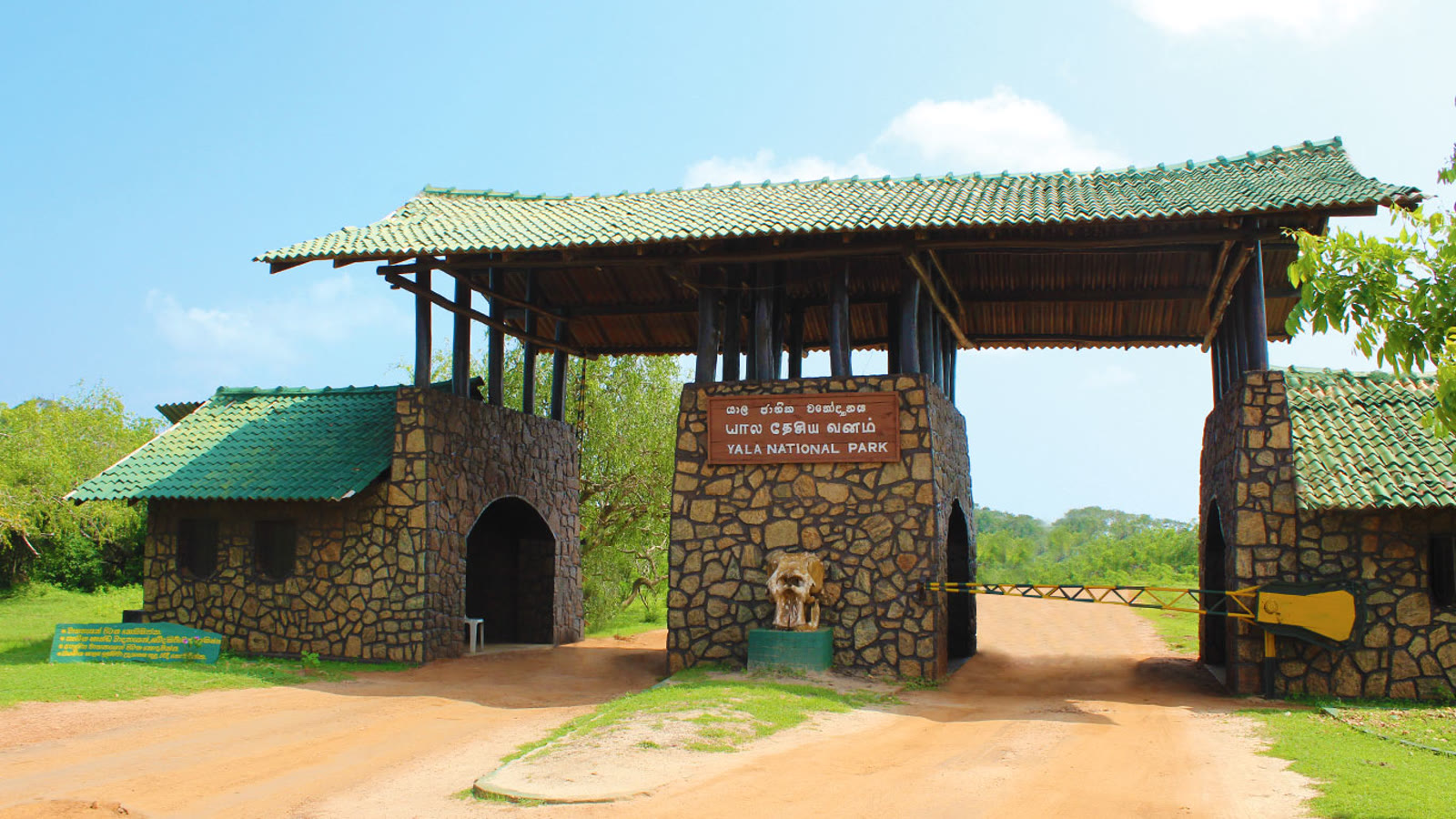
Yala Safari Sri Lanka: The Complete Guide
A Yala safari means one thing: a jeep, a licensed tracker, and Sri Lanka's most concentrated wildlife park, worked in three-to-six-hour runs through 979 km² of dry-zone forest, tank and lagoon. It's the single most-booked wildlife experience on the island, and also the most crowded if you book it badly. This guide covers what actually decides whether your Yala safari in Sri Lanka is great or forgettable: which block to pick, what a cozy or luxury jeep costs in 2026, private hire versus ride share, when to go, and how to avoid the "jeep jam" every review complains about.
What is Yala National Park
Yala sits on Sri Lanka's dry semi-arid southeast coast, established as a national park in 1938 and now the country's second-largest and most-visited. It holds an estimated 44 mammal species (from elephant to sloth bear), 215 recorded bird species with 7 endemics, and one of the highest leopard densities recorded anywhere on Earth, concentrated in a single zone: Block I.
The park runs on a permit system managed by the Department of Wildlife Conservation (DWC). You don't self-drive. Every visit is a jeep, a licensed tracker, and a DWC entry ticket bought in your name for that specific day. Yala's status as a national park dates to 1938, on the back of a much older, stranger history: see Yala Unfiltered for the colonial-era record and the current fleet crackdown shaping how safaris run today.
The five blocks and three gates
Yala is split into five numbered blocks, entered through three gates, and knowing which is which is the single biggest lever on how your safari actually feels.
- Block I, entered through Palatupana or Katagamuwa gate. 14,101 hectares, and the reason Yala is famous: the densest leopard population on the island. It's also where every first-time visitor is sent, which means it carries the most jeeps and, on a radioed leopard sighting, the infamous "jeep jam" of 30 to 50 vehicles converging at once.
- Block II, also reached through Palatupana/Katagamuwa. Yalawela grasslands and Menik River lagoons on the coast; elephant herds and painted stork colonies over the water. Its wilder coastal edge toward the Kumbukkan Oya is a different trip entirely: see Yala Block 2: the raw reality beyond the Menik Ganga.
- Block III, the large central block. Deep monsoon forest and quiet tracks, but not currently bookable as a standard day safari; access is expedition-permit only.
- Block IV and Block V, both entered through Galge gate on the park's western side. Wide forest and granite country, run at a flat surcharge over Block I and II for the extra distance, for dramatically fewer engines. If your priority is the park itself rather than a guaranteed leopard photo, this is where to start.
See the interactive park map to compare all five at a glance, or jump straight to booking a zone.
What you'll actually see
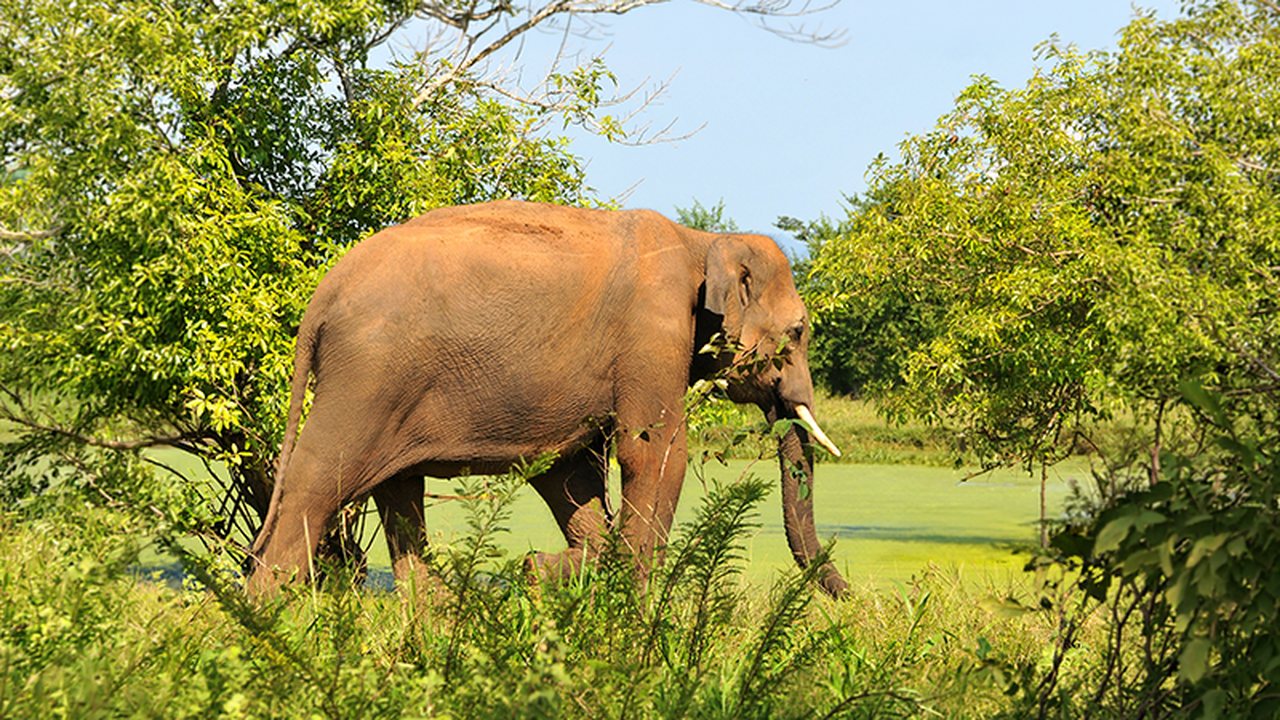
Elephant, leopard and sloth bear are the headline three, but Yala's range goes further: wild buffalo, mugger crocodile, spotted deer, and close to a hundred waterbird species across the tanks and lagoons in season. Block I holds the leopard advantage; Block II is stronger for elephant herds and birdlife; Blocks IV and V trade some of that density for genuine quiet. Full detail on the leopard specifically, including when the odds are best, is in the leopards of Block I.
Dawn, dusk or full-day
Every Yala safari runs as one of three durations:
- Dawn half-day, 06:00 to around 10:00. First light at the waterholes, the coolest hours, and generally the strongest window for predator activity.
- Dusk half-day, around 14:00 to 18:00. Elephants move to water as the heat breaks; a different rhythm to the park, not a lesser one.
- Full-day, 06:00 to 18:00, with a packed breakfast and lunch. The only way to run deep into a block rather than working its edge, and the standard choice for photographers with a specific list.
Gates run 06:00 to 18:00 daily, with one exception: the park closes for annual maintenance through much of September. Plan around it.
Jeep types and private vs ride share
Every safari runs in one of two jeeps. A cozy jeep (Mahindra or Tata) has standard side-facing bench seating and is the default choice. A luxury jeep (Mitsubishi or Toyota) is forward-facing and more comfortable for a longer run, at a flat surcharge over cozy.
You also choose how you take the jeep. A private jeep charters the whole vehicle exclusively for your group, up to six guests, at a flat rate regardless of how many of those seats you fill. Ride share is a flat price per person instead, currently offered to SAARC and foreign tourists at the Palatupana gate for parties of two or more: LKR 6,500 (cozy) or LKR 7,450 (luxury) per person for a dawn or dusk half-day. A lone traveller can't book ride share (the jeep runs either way, so a single fare can't cover it); two people sharing pay less between them than chartering the jeep privately, and the per-person price is charged for everyone in the party. Both options run the same route, the same tracker, and the same DWC entry.
What a Yala safari costs in 2026
Every total is built from two separate pieces, set by two separate authorities.
DWC park entry tickets, bought in your name for the day, priced by nationality tier rather than a simple local/foreign split:
- Local: Sri Lankan citizens and resident-visa holders. A per-person entry fee plus a flat service charge and vehicle fee.
- SAARC: India, Pakistan, Bangladesh, Nepal, Bhutan, Maldives and Afghanistan. DWC issues one collective ticket per group, so this is an all-inclusive total by adult headcount, not a per-person multiple; the average cost per person actually drops as the group grows, since the group's service charge is static. Children aged 6-12 add a flat per-child charge; under 6s are free.
- Foreign: every other nationality, the same all-inclusive-total structure as SAARC, at the higher standard rate.
Every private jeep also carries a flat LKR 150 entrance ticket for the driver, on top of your own tickets, since DWC requires the driver to hold one too. Select your nationality in the booking engine and your total updates immediately. Already hold a valid DWC permit? You can book the jeep alone and skip the ticket cost entirely. DWC can revise any of these rates without notice.
The jeep rate, fixed per jeep rather than per person, for up to six guests, and the same regardless of nationality. Our operator is based at the Palatupana gate, which sets the base rate; Katagamuwa (Block I/II) and Galge (Block IV/V) both add a flat LKR 5,000 on top, the operator's cost of travelling further to reach either:
- Palatupana gate (Block I or II), cozy jeep: a flat LKR 14,900 for dawn or dusk (launch pricing), LKR 28,900 for a full day.
- Palatupana gate, luxury jeep: LKR 18,000 for dawn, LKR 17,600 for dusk, LKR 32,500 for a full day.
- Katagamuwa gate (Block I or II) or Galge gate (Block IV or V): add LKR 5,000 to the Palatupana rate above, for either jeep type and any duration.
- Ride share, for two or more SAARC or foreign tourists at the Palatupana gate, is a flat LKR 7,500 (cozy jeep, Mahindra) or LKR 8,500 (luxury jeep, Toyota Hilux) per person for a half-day. Full-day ride share matches the private full-day rate for up to two people, with a further LKR 7,200 per person beyond that. If no other riders are available to share, the safari runs as a private charter instead, at the private rate. Locals aren't currently offered ride share.
- Local bookings cover Block I, Block IV and Block V; only Block II needs special DWC permission for local visitors and isn't offered as a standard rate.
Put together, at current DWC rates an all-inclusive dawn or dusk half-day for one adult in a cozy jeep in Block I starts from LKR 31,250, and a full day from LKR 45,250, tickets, driver's ticket and all park fees included. Exact totals for your group, nationality, zone, jeep type and trip type calculate live on the packages page and the booking engine, with nothing left to add at the gate.
Trust, safety and avoiding the jeep jam
A Yala safari is worth it when it's run properly: a DWC-licensed jeep and tracker, no self-driving, and a driver who treats a sighting as something to protect rather than chase. The single biggest quality lever isn't the season, it's the operator. A radioed leopard can pull 30 to 50 jeeps into one clearing within minutes; the cheapest driver is often the one racing hardest to get there. A responsible operator holds back from the scrum, keeps the engine down, and gives the animal space. Full detail on choosing well, including the case for the quieter blocks, is in beating the jeep jam.
When to go
February through July is the sharpest window for wildlife generally, and April to July specifically for leopards: low water, short grass, better sightlines. November through January brings migratory birds and a greener, cooler park, better for birding than big cats. September is the maintenance closure. Full seasonal detail, month by month, is in when to visit Yala.
Where to stay and getting picked up
Most visitors base themselves in Tissamaharama, the pickup town for both the Palatupana and Katagamuwa gates; every rate here already includes hotel pickup within that area. Staying further out, in Kataragama, Kirinda or Weerawila, usually still works, just confirm the pickup with your operator, since rides from further out carry an added charge.
For a different kind of trip, the DWC operates bungalows inside the park itself. Ondaatje and Warahana, both in Block I, are currently open for booking; sleeping inside the reserve, past the gate closure, with the park's night sounds around you, is a genuinely different experience from a day visit.
Park rules, in short
- Gates run 06:00 to 18:00. No exceptions.
- An experienced tracker rides in every vehicle.
- Stay in the jeep at all times; feet on the floor, designated stops only.
- 25 km/h park speed limit. No convoys, no off-track driving.
- No horns, music, feeding, flash photography or single-use plastic.
- The park closes for maintenance through much of September.
How to book a Yala safari
Booking takes about a minute: pick your zone on the interactive map, choose dawn, dusk or full-day, set your group size, jeep type and trip type, and the total (DWC tickets and all park fees included) calculates live. A booking is confirmed once payment clears, at least two hours before your park entrance time, and your assigned tour operator reaches out directly with pickup details.
FAQ
What is the best time for a Yala safari? April to July for the strongest leopard odds; November to January for birdlife and cooler weather. Avoid building a trip around September, when the park closes for maintenance.
How much does a Yala safari cost? At current DWC rates, an all-inclusive dawn or dusk half-day for one adult in a cozy jeep in Block I starts from LKR 31,250, and a full day from LKR 45,250. DWC pricing depends on nationality: Sri Lanka gets the local rate, SAARC nationals get a reduced rate, everyone else pays the standard rate. See live pricing on the packages page or get an exact total in the booking engine.
Which block should I choose? Block I for the best leopard odds and the most established infrastructure. Block II for elephant herds and birdlife on the coast. Blocks IV and V, through Galge gate, for the same wild country with far fewer jeeps.
How many people fit in a Yala safari jeep? Up to six guests per jeep. Two or more SAARC or foreign tourists at the Palatupana gate can book ride share instead, at a flat price per person.
What's the difference between a private and a ride share safari? A private jeep is chartered exclusively for your group at a flat rate. Ride share is a flat per-person price instead, for SAARC and foreign tourists at the Palatupana gate, minimum 2 people, so a lone traveller can't book it: the jeep needs at least two people sharing to bring the per-person price below chartering privately. If no other riders turn up to share, the safari runs as a private charter instead, at the private rate.
Does my nationality affect the price? Yes, the DWC park entry ticket, not the jeep rate, depends on your nationality. Sri Lankan citizens and resident-visa holders get the local rate. SAARC nationals (India, Pakistan, Bangladesh, Nepal, Bhutan, Maldives, Afghanistan) get a reduced tourist rate. Every other nationality pays the standard rate.
Do I need to book in advance? Yes. Every visit runs on a DWC permit issued in your name for a specific day, and jeeps are arranged ahead of time, not at the gate.
Can I do a Yala safari without a tour operator? No. Self-driving isn't permitted; every safari requires a licensed jeep, driver and tracker.
Why does Katagamuwa or Galge cost more than Palatupana? Our operator is based at the Palatupana gate, so that's the base rate. Katagamuwa (Block I/II) and Galge (Block IV/V) both add a flat LKR 5,000, the cost of travelling further to reach either gate.
Ready to pick a zone and lock in a date? Book your Yala safari.
Ready to see it for yourself?
Book a safari